Drum roasters explained: construction, heat transfer, batch sizes from 100 grams to 120 kilos, gas against electricity, what a drum roaster costs and why almost every roastery works with one.
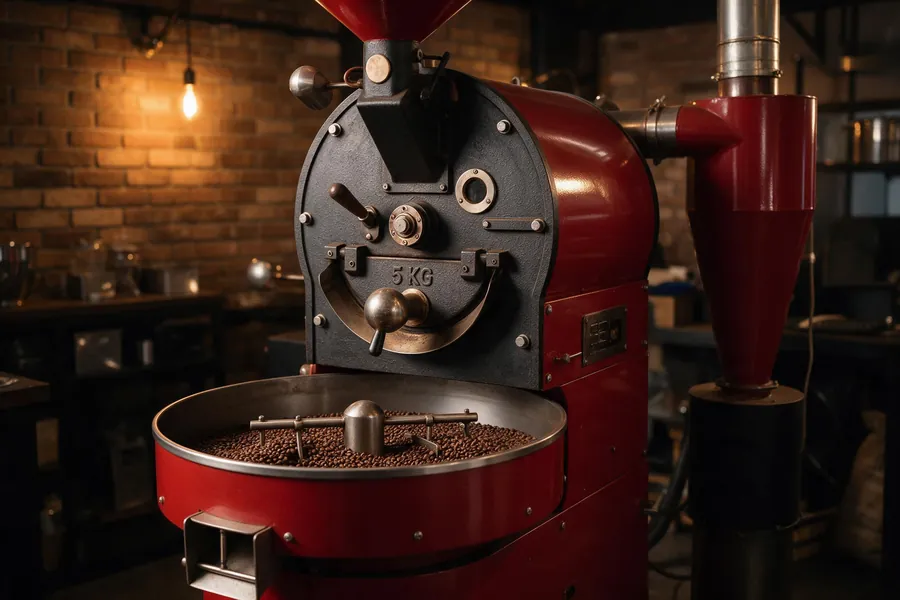
The drum roaster is the picture you have in mind when you think of a roastery: a rotating steel drum, burners underneath, a sight glass and a trier at the front, the round cooling tray beside it. The design is more than 150 years old and still dominates, because it transfers heat the way coffee likes it: slowly, evenly, controllably.
Construction
The beans lie in a horizontal drum that turns at 40 to 70 revolutions per minute. Vanes inside lift them and let them fall. The heat comes from below, from gas burners or electric elements, and reaches the bean in three ways: through contact with the hot drum wall (conduction), through the hot air a fan draws through the drum (convection), and through radiation from the drum itself. A cyclone separates chaff and smoke from the exhaust. After the roast the beans drop into a cooling tray with a stirring arm and extraction, where they have to reach room temperature within two to four minutes.
Solid drum or double wall
Classic roasters have a thick cast drum that stores a lot of heat. They roast softly and evenly but react slowly to changes. Modern roasters have double walled or perforated drums, where the hot air flows directly through the beans. They react faster and allow shorter, cleaner profiles, typical of light filter roasts.
Gas or electricity
From about one kilo of batch size, gas is the standard: high power, fine control, low running costs. It needs a gas connection or bottles, a flue and, depending on the country, an inspection. Electric drum roasters exist up to around five kilos. They are easier to install but react more slowly and draw a lot of power. For home use and small roasteries in residential areas they are often the only option.
Batch sizes and prices
| Class | Batch | Price | Who for |
|---|---|---|---|
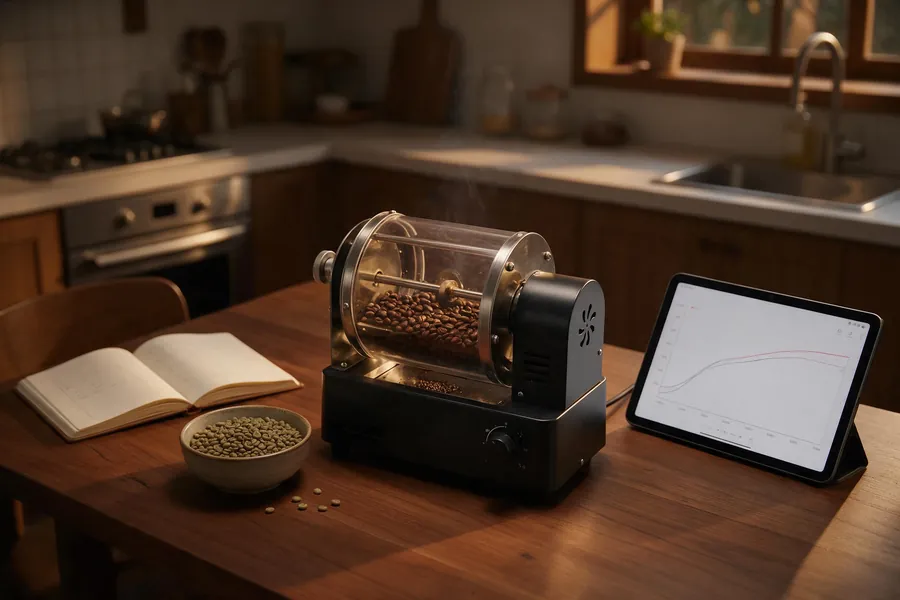
| Sample roaster | 50 to 300 g | 1,500 to 8,000 € | buyers, home roasters, profile development |
| Small roaster | 1 to 3 kg | 6,000 to 20,000 € | cafés, micro roasteries |
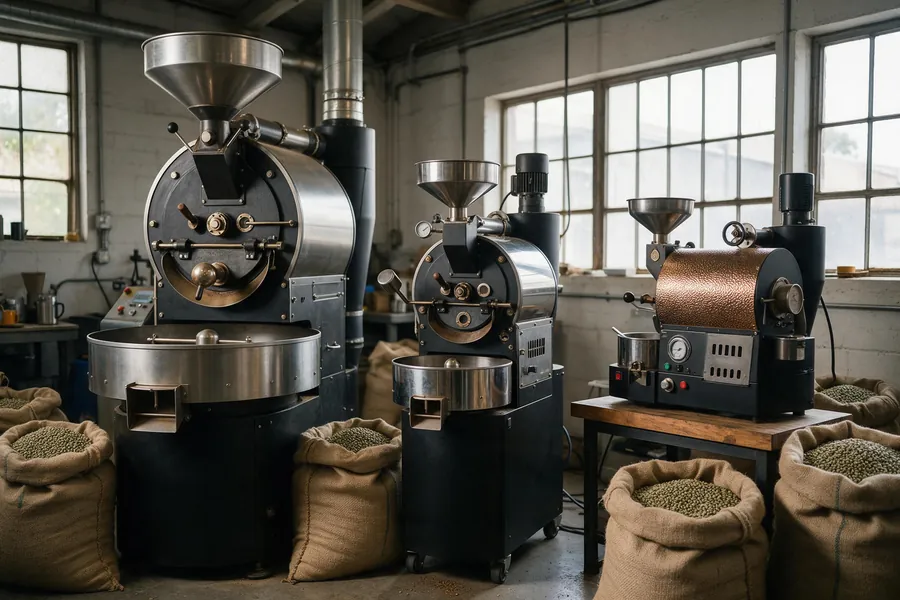
| Roastery | 5 to 15 kg | 20,000 to 60,000 € | roasteries with wholesale |
| Industrial | 30 to 120 kg | from 80,000 € | large roasters |
What the drum roaster does well
Sweetness, body, depth. The slow, even heat transfer gives the Maillard phase time and develops caramel and chocolate. Espresso roasts are made almost exclusively on drum roasters. With modern controls and airflow, light, clean filter roasts are possible too.
Care
Chaff collects in the cyclone and drum and is flammable. Skip cleaning after a roasting day and you risk a fire. Exhaust ducts have to be cleared of coffee oils monthly to yearly, depending on throughput. Bearings and drive need regular servicing.
For
- Full control over profile and heat transfer
- Sweetness, body and depth in the cup
- A long service life with spare parts available
- Scales from sample roaster to industry
Against
- Expensive, heavy, needs an exhaust
- Heat up time of 20 to 40 minutes
- Cleaning of drum, cyclone and exhaust
- With gas: a connection and permits
Common questions
How long does a roast take in a drum roaster?
Nine to thirteen minutes for one batch, plus three minutes of cooling. Between batches the roaster has to return to charge temperature.
Gas or electric for a drum roaster?
From one kilo of batch size, gas is the standard. Electric is the solution for residential areas and home use, but slower to react and more expensive to run.
Share