Hot air roasters explained: the fluid bed principle, why they roast faster and cleaner, what they lack in body, designs from home unit to industrial plant and which coffees they suit best.
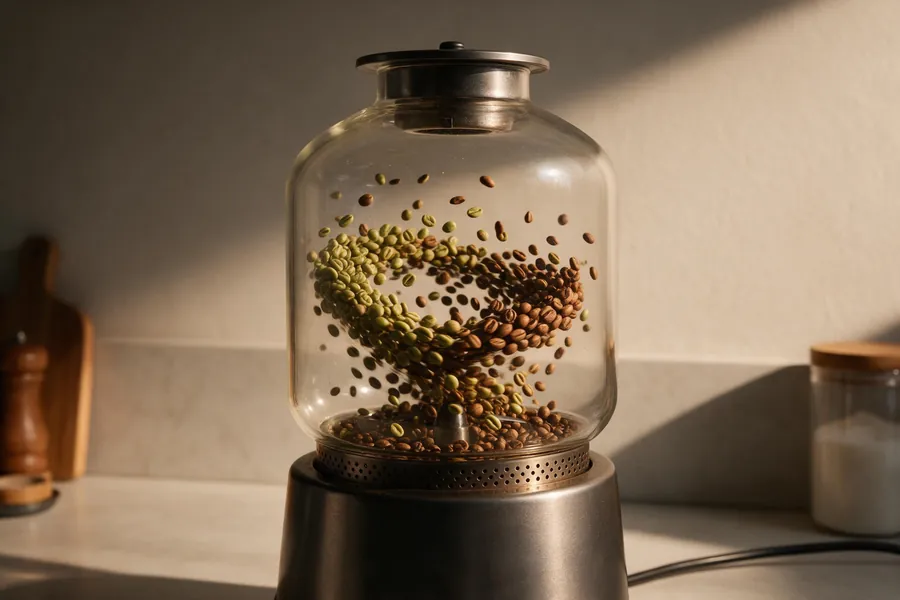
A hot air roaster has no drum. A powerful fan blows hot air up through the beans, so that they float and circle in the airstream as in a fluid bed. The heat comes entirely through the air, with no hot metal surface. That makes the roast fast and very even, but also different in taste.
The principle
Convection, nothing else. Because every bean is surrounded by hot air on all sides, there are no scorch marks and no differences between inside and outside. The roast often takes only five to nine minutes. Chaff is blown away immediately and collected in a container, which keeps the roast clean and low in smoke.
The taste
Hot air roasts are clean, bright and lively in acidity. They show the fruit and florals of an origin very clearly and suit filter coffee from Ethiopia, Kenya or Colombia excellently. What they often lack is the sweetness and heavy body that the long Maillard phase in a drum roaster creates. Espresso roasts from a hot air roaster can therefore feel thin. Some roasters like exactly that clarity, others find it too sober.
Designs
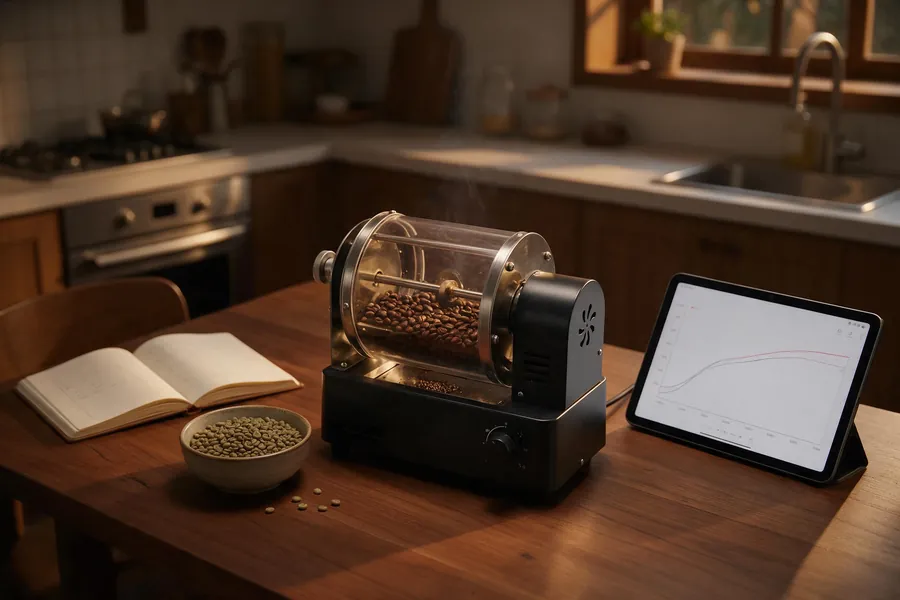
- Home roasters with a glass chamber: 50 to 250 grams, electric, from 150 euros. The beans are visible and the profile is steered with temperature and fan speed. Ideal for learning.
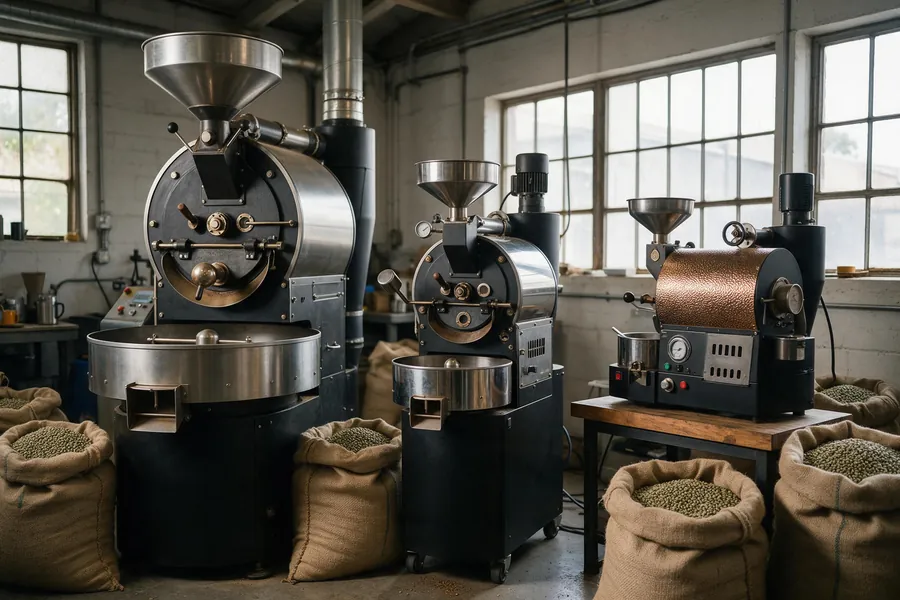
- Fluid bed roasters with controls: 0.5 to 2 kilos, with profile logging, 3,000 to 10,000 euros. For cafés with a filter focus.
- Industrial fluid bed roasters: up to several hundred kilos, with very short roast times. Also usual for instant and commodity coffee.
Who it is for
For home roasters who want to work cleanly and fast. For filter roasteries with a light profile. For buyers who have to roast many samples quickly. Less so for classic espresso roasts with depth and chocolate.
For
- Fast roasts of 5 to 9 minutes
- Bright, clean profiles with lively acidity
- No contact heat, no scorching
- Easy cleaning, little smoke
Against
- Less body and sweetness than from a drum
- Loud because of the fan
- Sensitive with very dense beans
- First crack is hard to hear
Common questions
What is the difference between a drum and a hot air roaster?
The drum roaster transfers heat through the drum wall and the air and roasts slowly with plenty of sweetness and body. The hot air roaster works with air only, roasts faster and cleaner, but with less body.
Can you roast espresso in a hot air roaster?
Yes, but the profiles turn out cleaner and less chocolatey. With a longer Maillard phase and lower airflow you get closer to the drum.
Share