Roasting machines compared directly: drum roasters, hot air roasters, home roasters, sample roasters and popcorn machines by batch size, price, roast time, flavour profile, effort and suitability. With a decision guide.
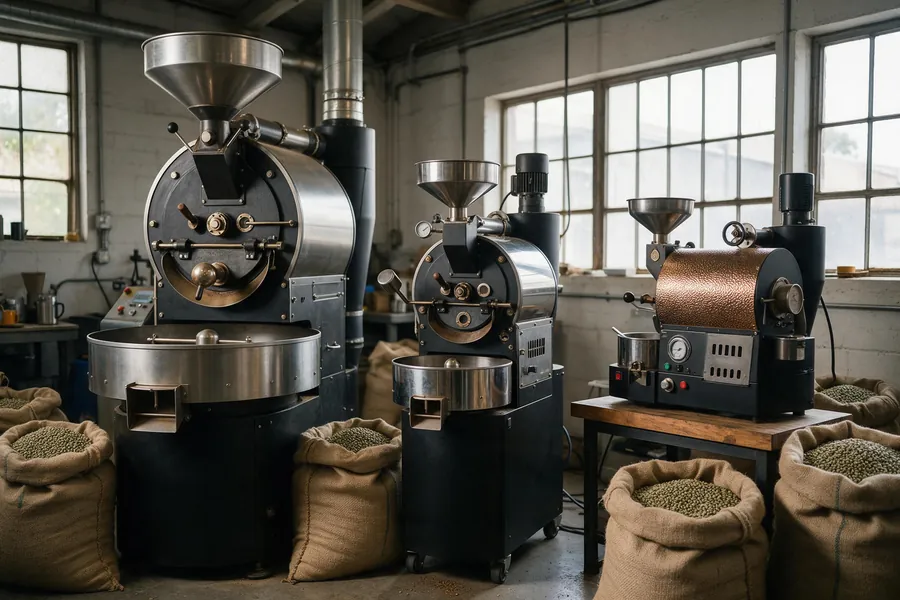
The question is not which roasting machine is the best, but which is right for your goal. Someone roasting 200 grams on a Sunday for their own week needs something different from a café supplying its own counter. The table shows the types side by side, and below it you find how to decide.
The decision in four questions
- How much coffee do you drink or sell per week? Convert the weekly need into batches. A roaster should cover the need in one to two hours, otherwise the hobby becomes a duty.
- Filter or espresso? For light filter profiles hot air is ideal and cheaper. For espresso with sweetness and body there is no way past the drum.
- Where does the machine stand? Indoors: electric, small, low in smoke. In a garage or workshop: anything is possible. Commercially: exhaust, fire safety and, with gas, an inspection.
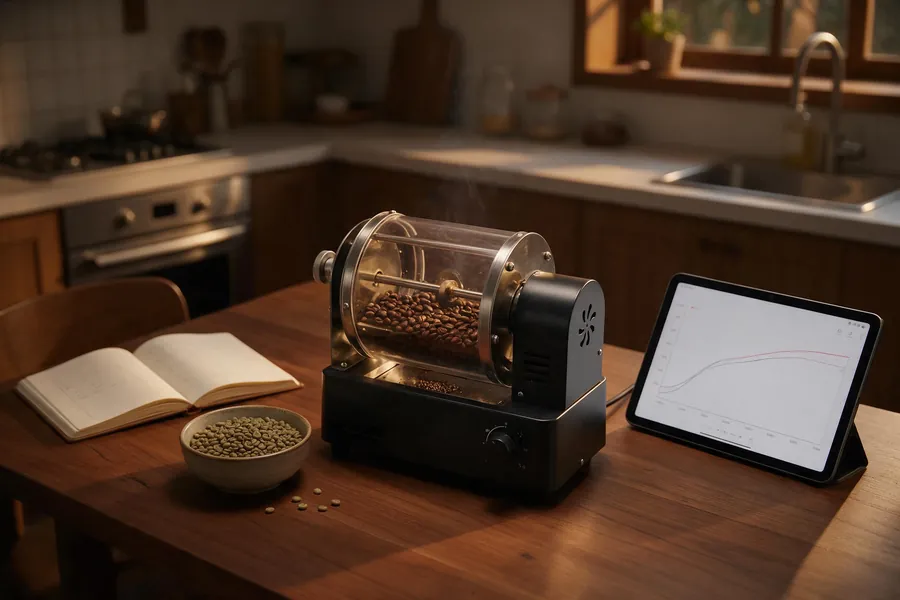
- Do you want to log profiles? From the serious hobby onwards, temperature logging with software is worth gold. It costs 100 to 500 euros extra and makes every roast repeatable.
Running costs people forget
- Green coffee: the biggest item. 8 to 25 euros a kilo.
- Energy: a one kilo gas roaster uses around 0.3 kilos of gas an hour, an electric roaster 1.5 to 3 kilowatt hours.
- Exhaust: commercially often an afterburner or catalyst, 3,000 to 15,000 euros.
- Wear: bearings, gaskets, heating elements. Budget two to five percent of the purchase price a year.
- Waste: the first 20 batches on any machine are tuition.
What we recommend
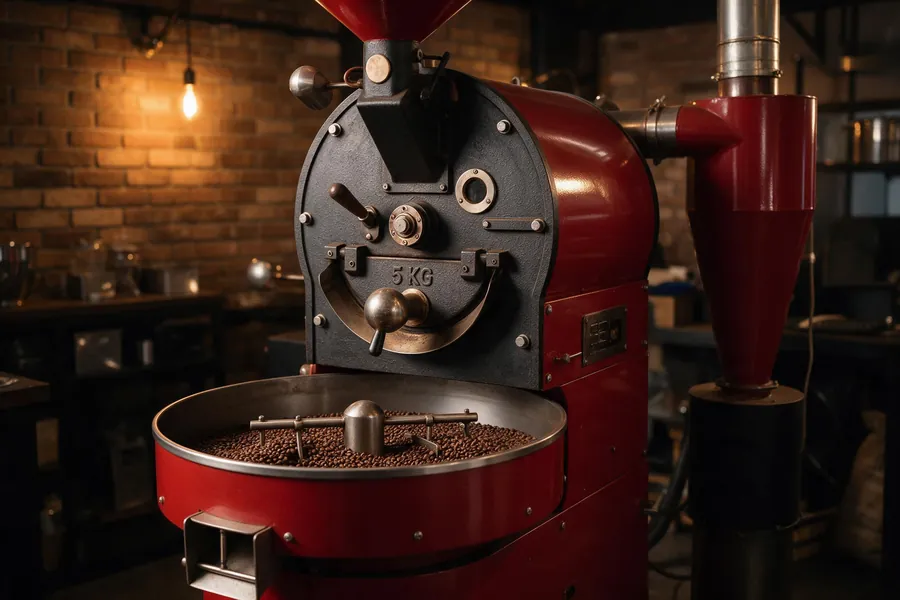
To try it out: a popcorn machine and half a kilo of green coffee. To start properly: a hot air roaster with controls. For the serious hobby: an electric drum roaster of 500 grams to one kilo with profile software. For a micro roastery: a one kilo gas roaster, ideally used. Anything above that is a question of the business plan, not of taste.
For
- One look at every type
- Figures instead of advertising
- A decision guide by goal and budget
- Running costs included
Against
- The figures are ranges, not quotes
- No brand comparison
- The used market is not covered
- Local regulations vary
| Type | Popcorn machine | Hot air home roaster | Small electric drum | Gas drum 1 kg | Drum 5 to 15 kg | Hot air 1 to 5 kg |
|---|---|---|---|---|---|---|
| Batch | 80 g | 100 to 250 g | 250 g to 1 kg | 1 kg | 5 to 15 kg | 1 to 5 kg |
| Price | 30 € | 150 to 500 € | 500 to 2,500 € | 1,500 to 8,000 € | 20,000 to 60,000 € | 5,000 to 25,000 € |
| Roast time | 4 to 6 min | 6 to 10 min | 10 to 14 min | 10 to 13 min | 10 to 14 min | 6 to 10 min |
| Profile | random | clean, bright | sweet, balanced | sweet, deep | sweet, deep | clean, clear |
| Control | none | medium | high | high | very high | high |
| Smoke | a lot | little | medium | a lot | a lot | little |
| Suited to | trying it out | starting out, filter | a serious hobby | a micro roastery | a roastery | a filter roastery |
Common questions
Which roasting machine for beginners?
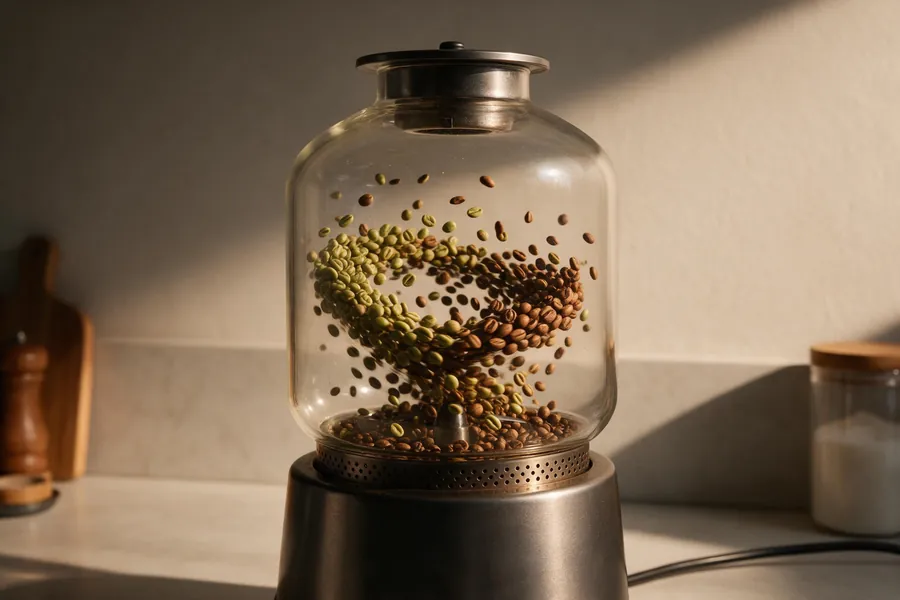
A hot air roaster with adjustable temperature and fan for 150 to 500 euros. It is clean, fast and shows the roast through the glass chamber.
What does a roasting machine for a café cost?
A one kilo gas roaster costs 4,000 to 8,000 euros new and often half that used. Add exhaust, installation and green coffee.
Share