Roasting your own coffee: which machines are suitable at home, what green coffee costs, how the first roast succeeds, smoke and neighbours, and why it all adds up if you mean it.
Anyone who has roasted once buys coffee differently. You understand what freshness means, what really separates light from dark and why the bag from the roastery is worth its price. And with a little practice you drink coffee at home that tastes exactly the way you want it.
The machines
- A pan or pot: 0 euros. Stir constantly, extraction on, done after eight to twelve minutes. Uneven, but instructive.
- A hot air popcorn machine: 30 euros. 80 grams in five minutes. No control, but a good first contact.
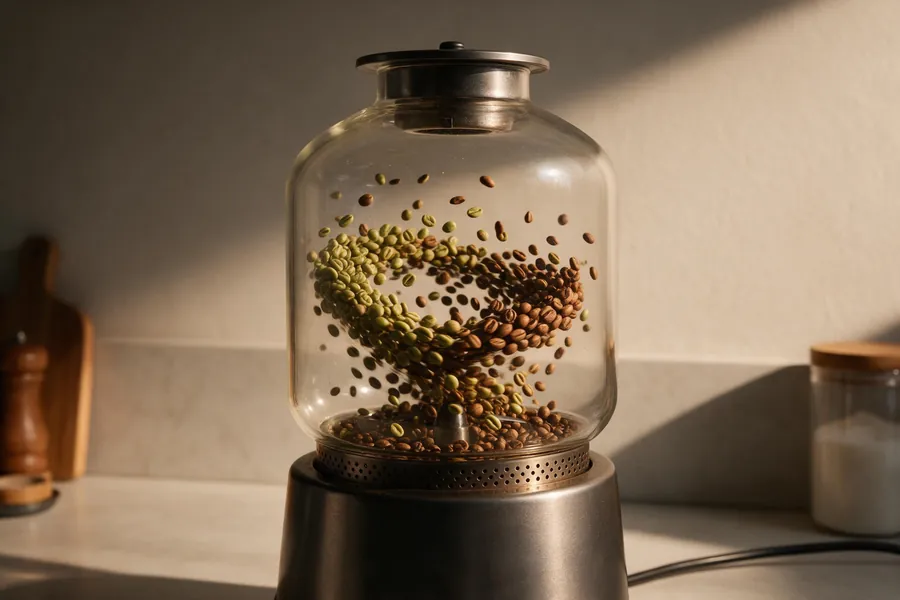
- A hot air roaster with controls: 150 to 500 euros. 100 to 250 grams, adjustable temperature and fan, glass chamber. The sensible entry point.
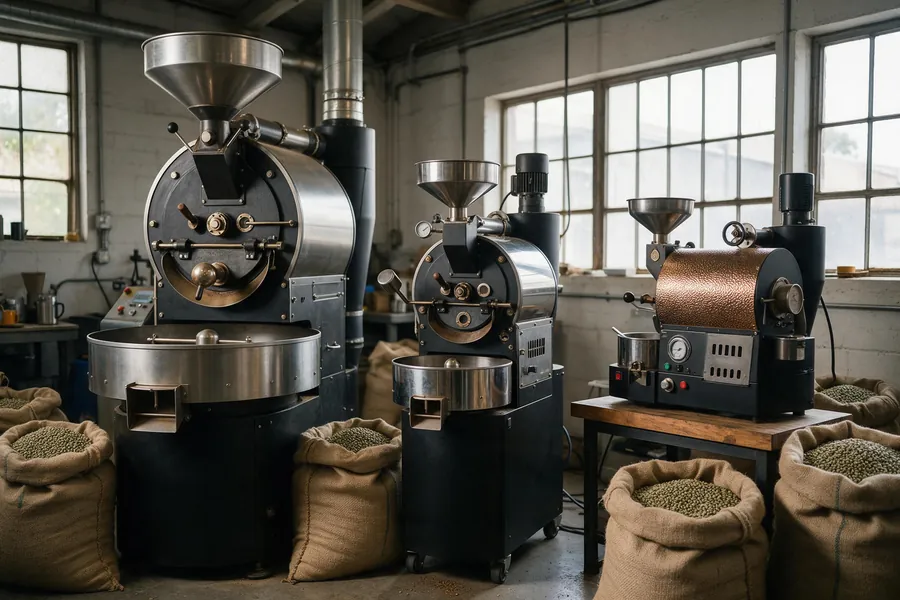
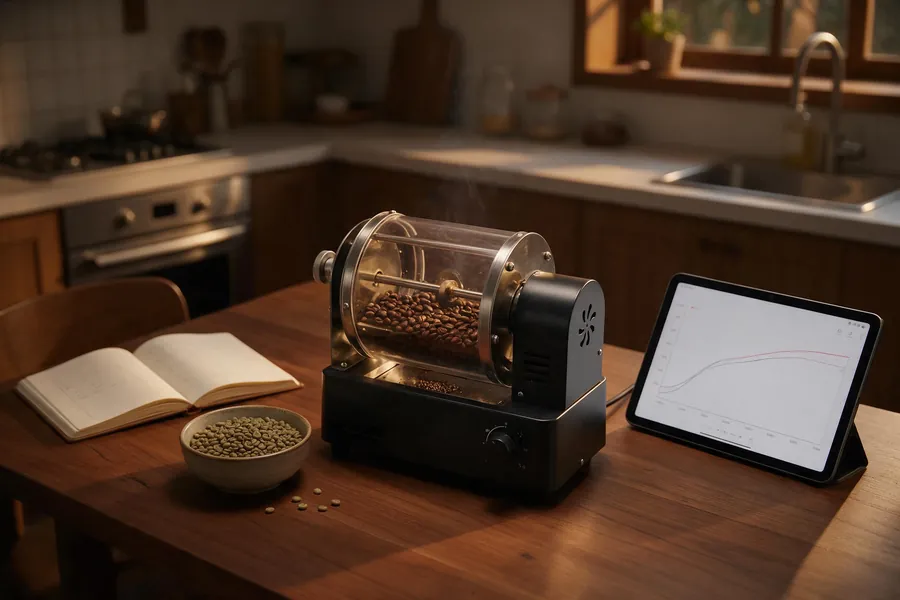
- An electric drum roaster: 500 to 2,500 euros. 250 grams to one kilo, profile control, often with software. For everyone who means it.
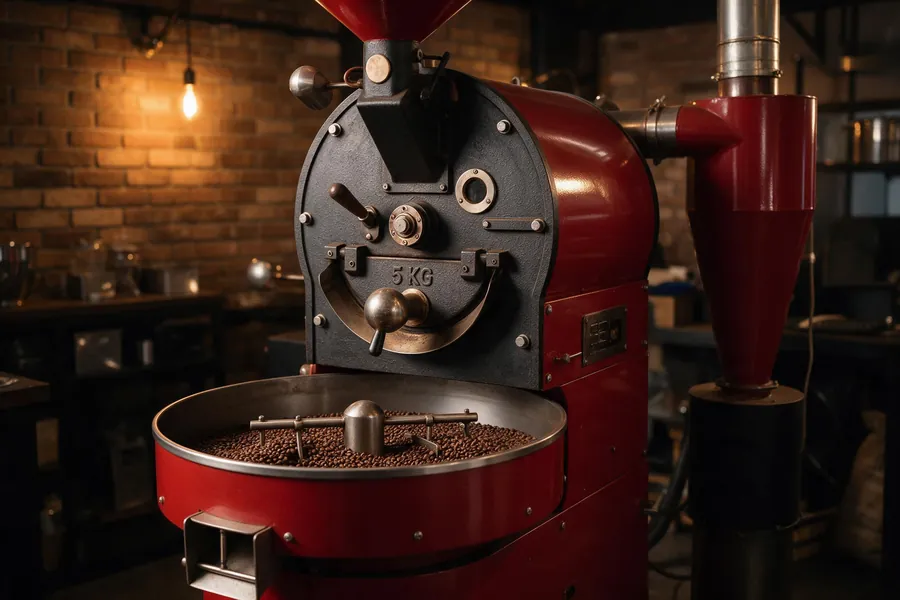
- A gas drum roaster for home: 1,500 to 4,000 euros. One kilo per batch, a roastery feeling, needs a garage or workshop.
Green coffee
Green coffee is green, hard and keeps for a year and more in dry storage. It costs 8 to 25 euros a kilo depending on quality, and specialty coffee with an origin and farm around 12 to 20 euros. During roasting the bean loses 12 to 18 percent of its weight. So one kilo of green coffee gives around 850 grams of roasted coffee. Traders for small amounts ship from 500 grams.
The first roast
- Preheat the machine, switch on the extraction or open a window.
- Load the recommended amount, usually 100 to 200 grams.
- Watch it: green, yellow, light brown. The smell goes from hay through bread to caramel.
- Wait for first crack, the snapping at around 196 degrees. From now on the clock counts.
- Stop one to two minutes after first crack for a medium light roast.
- Cool immediately, on a sieve with a fan or by pouring between two sieves.
- Rest for two to four days, then taste and take notes.
Smoke, chaff, neighbours
Roasting creates smoke, above all from first crack onwards, and the smell lingers. A kitchen with an extractor is the minimum; a balcony, garage or garden is better. The chaff, the thin silverskin of the bean, flies everywhere. Fire is the real risk: never roast unattended and remove the chaff after every batch.
Does it add up?
At one kilo of roasted coffee a month you save 10 to 20 euros a month against buying from a roastery. A 300 euro roaster pays for itself in two years if you stick with it. The real gain is a different one: you drink coffee that cannot be bought, because you roasted it exactly to your taste.
For
- Full control over freshness and roast level
- Green coffee costs half of roasted coffee
- A deep understanding of coffee
- A hobby you can drink
Against
- Smoke and smell, extraction needed
- The first roasts go wrong
- Time: 15 to 20 minutes per batch plus cleaning
- The temptation to keep buying new machines
Common questions
Can you roast coffee at home?
Yes, in a pan, in a popcorn machine or in a home roaster. What matters is smoke extraction, fast cooling and notes on every roast.
What does green coffee cost?
Between 8 and 25 euros a kilo, and around 12 to 20 euros for good specialty coffees with an origin. One kilo of green coffee gives around 850 grams of roasted coffee.
How long does home roasted coffee need to rest?
Two to four days for filter, seven to ten days for espresso, so that the carbon dioxide can escape.
Share