The bean to cup machine in portrait: what it can do, where its limits are, why the espresso tastes different from a proper espresso machine, what matters when buying and how much care is really needed.
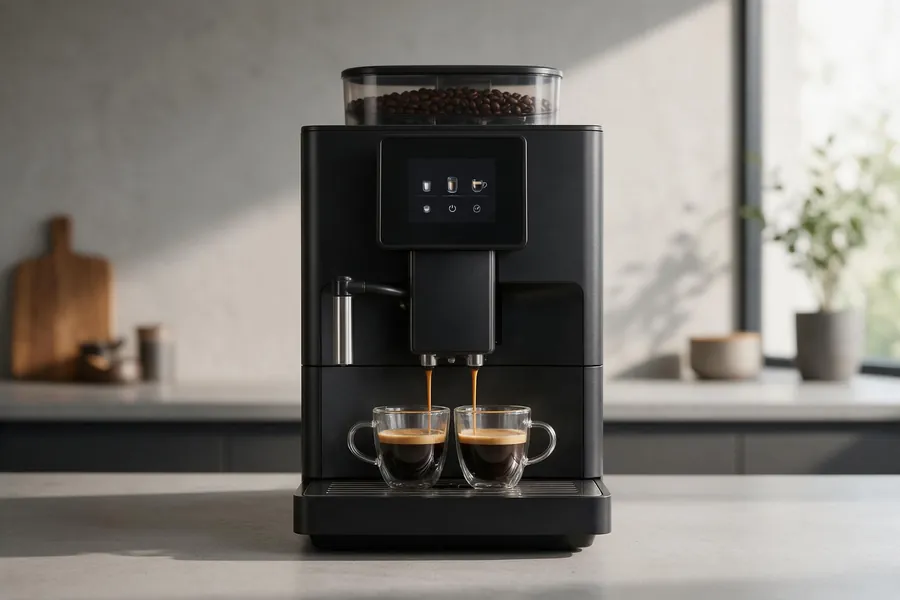
The bean to cup machine is the machine for households. It grinds, doses, presses, brews and ejects the puck, all in a minute, and it does that for anyone who can press a button. The compromise is in the detail: the espresso is pulled at lower pressure and with less coffee than on an espresso machine, and the milk foam is airy rather than velvety. For a great many people that is exactly right.
How it works
A conical burr grinds one portion, usually seven to twelve grams, into a brew chamber. A piston presses the coffee, a pump pushes water through it, and the rest drops into the waste container. The amount of water decides whether you get an espresso or a caffè crema. Because these machines work with less coffee and a shorter contact time, the espresso tastes milder and thinner than from an espresso machine.
What matters when buying
- Burrs: Ceramic is quiet and wears slowly, steel grinds a little finer. What matters is fine adjustability.
- Brew unit: Removable is better, because you can rinse it under the tap. Fixed brew units clean themselves with tablets, but you never see what it looks like inside.
- Coffee per shot: Machines that dose up to twelve grams make noticeably stronger espresso than those capped at eight.
- Milk system: A steam wand for manual foaming, an automatic frother with a tube, or an integrated milk system with a container. The more automatic it is, the more cleaning it needs.
- Temperature: Adjustable in steps is a plus for light roasts.
Care
Daily: empty the waste container and drip tray, rinse the milk system. Weekly: take out the brew unit and rinse it. Monthly: cleaning tablet and descaling as prompted. Ignore that and after two years you have mould in the brew chamber and coffee that tastes of it.
Who it is for
For families and offices, for people with no time in the morning, and for everyone who wants freshly ground coffee at the press of a button. Not for espresso purists and not for latte art ambitions.
For
- Freshly ground at the press of a button
- Anyone in the household can use it
- Fast, hardly any heat up time
- Many drinks can be programmed
Against
- Espresso less dense and complex than from an espresso machine
- Milk systems foam airy rather than velvety
- Regular cleaning of the brew unit and milk lines is mandatory
- Repairs from the fifth year onwards
Common questions
Why does espresso from a bean to cup machine taste different?
Less coffee per shot, less pressure and a shorter contact time than an espresso machine. The result is milder and thinner, but very consistent.
How often does a bean to cup machine need cleaning?
The milk system daily, the brew unit weekly, descaling and a cleaning tablet about monthly, depending on the prompts.
Share