Cupping step by step: grind, ratio, breaking the crust, slurping and scoring on aroma, acidity, body, sweetness and aftertaste. With the aroma wheel and a scoring sheet for home.
In short
- The standard: 8.25 g of coarsely ground coffee to 150 ml of water at 93 °C, steeped for four minutes.
- Break the crust, skim, slurp from 70 °C and keep tasting until it is cold.
- You score aroma, acidity, body, sweetness, balance and aftertaste.
Cupping is the method by which coffee is compared worldwide: the same grind, the same water, the same time, no machine. Everything that could influence the taste is switched off, so that only the coffee is left. Roasters cup every roast, buyers cup every sample. And at home it is the fastest way to really learn to taste.
The set up
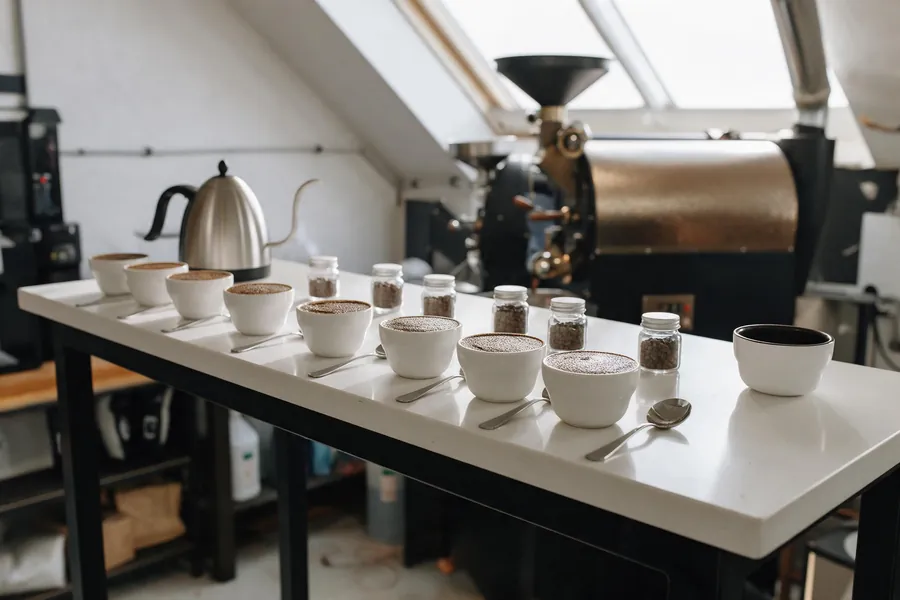
For each coffee a bowl holding around 200 millilitres, ideally several bowls per coffee. Plus cupping spoons or deep soup spoons, a glass of hot water to rinse the spoons, a kettle at 93 degrees and a scale. All coffees are roasted the same way, medium light, and rest for 8 to 24 hours after roasting.
The routine
- Smell it dry: Grind 8.25 grams per bowl coarse, a little coarser than for a pour over. Smell the grounds and note your first impressions.
- Pour: 150 millilitres of water at 93 degrees into every bowl, so that everything is wet. Timer on four minutes.
- Break the crust: After four minutes push the crust of coffee that has formed on top back three times with the spoon, holding your nose over the bowl. That is the most intense moment of aroma.
- Skim: Take off the foam and floating particles with two spoons.
- Slurp: From about 70 degrees take coffee with the spoon and slurp it in loudly, so that it spreads finely in the mouth and reaches the nose. Rinse the spoon between bowls.
- Repeat: Until the coffee is cold. As the temperature drops, acidity and sweetness show more clearly and faults become visible.
What gets scored
- Fragrance and aroma: the smell dry and wet.
- Flavour: the overall impression in the mouth. The aroma wheel helps here: is it fruity, floral, nutty, chocolatey, spicy, roasty?
- Acidity: the acidity, scored on quality and intensity. Bright citrus acidity is wanted, vinegary acidity is a fault.
- Body: the mouthfeel, from tea like to syrupy.
- Sweetness: the sweetness that carries everything.
- Balance and aftertaste: does it all fit together, and how long does the taste stay?
- Defects: fermented, musty, phenolic, rubbery. A fault in one bowl is one bean, a fault in every bowl is the batch.
The points
The scoring system of the Specialty Coffee Association awards up to 100 points. From 80 a coffee counts as specialty, from 85 as very good, from 90 as exceptional. Scores above 90 are rare and usually tied to auction prices. For home use, a scale of one to five for acidity, body, sweetness and aroma, filled in honestly, is enough.
Common questions
What is cupping?
The standardised tasting of coffee: coarsely ground coffee is brewed in bowls with hot water, the crust is broken after four minutes and the coffee is slurped from a spoon and scored.
Why do you slurp when cupping?
Slurping loudly spreads the coffee finely in the mouth and carries aromas into the nose. You taste more that way than by drinking normally.
How many points does specialty coffee need?
At least 80 out of 100 points on the Specialty Coffee Association scoring sheet.
Share