Understanding the roast curve: turning point, drying phase, Maillard phase, development time and rate of rise. Why a roast profile says more about taste than the roast level and how to read a curve.
In short
- A roast has three phases: drying (up to 150 °C), Maillard (150 °C to first crack), development (after first crack).
- The rate of rise should fall steadily. A dip after first crack makes the coffee flat.
- A development time ratio of 15 to 25 percent is a good frame, not a law.
Two roasters can take the same green coffee to the same roast level and the cups taste completely different. The reason is the route there: the roast curve. It plots bean temperature over time, and its shape decides acidity, sweetness, body and clarity.
The curve
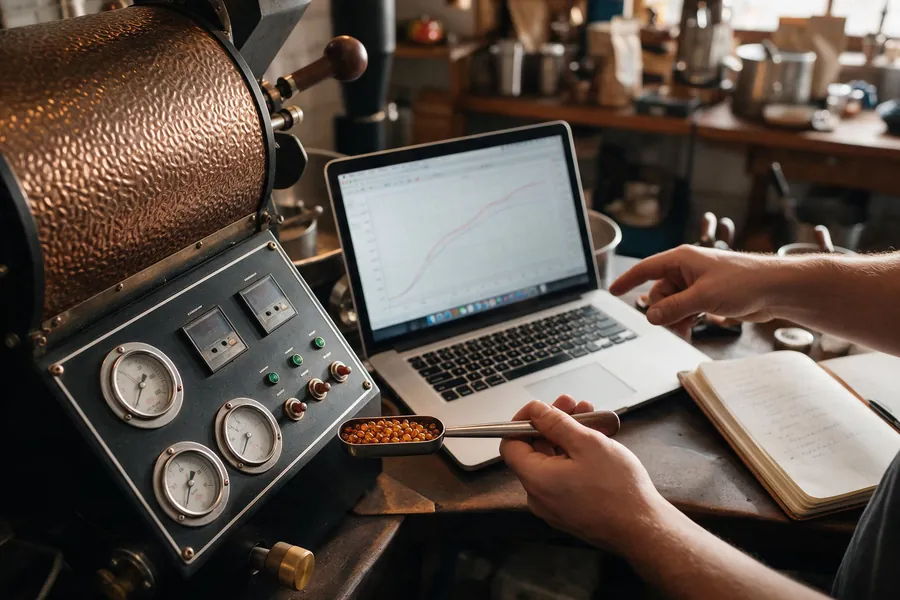
A roast curve begins when the green beans drop into the preheated drum. The temperature reading falls first, because the cold beans cool the probe, and reaches the turning point after 60 to 90 seconds. From there it rises, steeply at first, then ever more gently, until the end of the roast. The second important line is the rate of rise, or RoR: it shows how many degrees the temperature climbs per minute. A healthy roast has a RoR that is high after the turning point and then falls steadily and without jumps.
Three phases
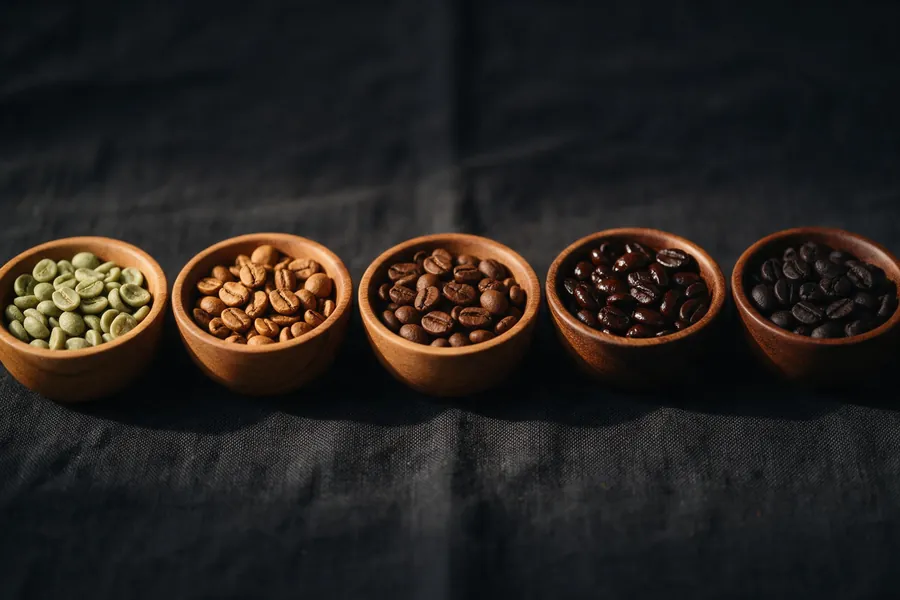
- Drying phase, from the drop until about 150 degrees bean temperature. The bean loses water and turns from green to yellow. It lasts four to five minutes. Too fast and the bean is roasted outside and raw inside. Too slow and the aromas are washed out.
- Maillard phase, from 150 degrees to first crack. Sugars and amino acids build the roast aromas, the bean turns brown and smells of bread. A longer Maillard phase brings more body and sweetness, a shorter one more acidity and clarity.
- Development phase, from first crack to the end. This is where the roast level is decided. The bean expands, acids are broken down, caramel forms. Too short and the coffee tastes grassy and sharp. Too long and the aromas flatten out.
Development time ratio
The share of the development phase in the total time is called the development time ratio, or DTR. In a twelve minute roast with first crack after nine and a half minutes, the DTR is around 20 percent. The usual frame is 15 to 25 percent: filter roasts towards the lower end, espresso roasts towards the upper. It is a guide, not a recipe. A dense Kenyan coffee takes more, a soft Brazilian less.
What roasters control
- Charge temperature: higher for dense, high grown coffees, lower for soft naturals.
- Gas or heating power: the most important lever. Usually reduced in steps so that the RoR falls gently.
- Airflow: more air carries smoke and chaff away and speeds up convective heat transfer. Too little air makes the coffee smoky.
- Drum speed: affects how much heat passes from the drum wall to the bean.
- Batch size: half batches roast faster and differently. That is why every profile is developed for a particular amount.
Reading the curve
A flat, stretched curve with a late arrival at first crack usually gives a sweet, full bodied coffee with little acidity. A steep, fast curve gives clarity, acidity and fruit, but less body. For roasting at home the rule is: record the curve, judge the cup, change one variable, repeat. The curve is the roaster's memory.
Try it out
Roast level explorerSlide the bean through the roast and see what changes at every degree.Common questions
What is rate of rise in roasting?
The slope of the bean temperature, measured in degrees per minute. It should fall steadily after the turning point and must not collapse after first crack.
How long does a roast take?
Nine to thirteen minutes in a drum roaster, often only six to nine in a hot air roaster. Filter roasts are usually shorter than espresso roasts.
What does development time mean?
The time from the start of first crack to the end of the roast. Its share of the total time, the development time ratio, is usually between 15 and 25 percent.
Share