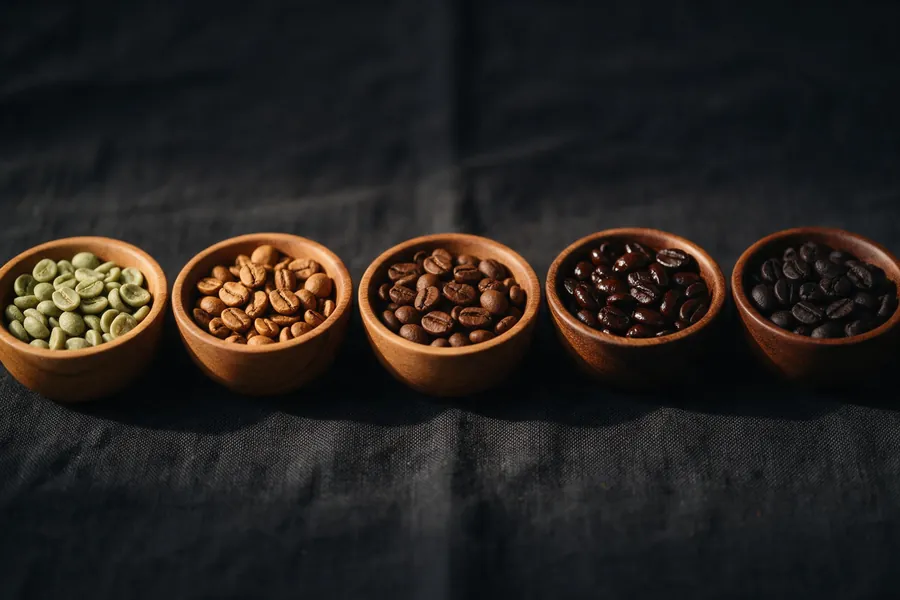
Every roast level from light to dark: cinnamon, city, full city, vienna, french and italian. What happens at which temperature, how acidity, sweetness and bitterness shift, and which roast level suits which brewing method. With the roast level explorer.
In short
- Light: plenty of acidity, fruit, florals, high density. For filter.
- Medium: a balance of acidity, sweetness and roast aromas. For everything.
- Dark: roast aromas dominate, the origin disappears, oil shows on the surface. For espresso with milk.
The roast level is the simplest statement on a bag of coffee and the most misunderstood. Light is not weak, dark is not strong. The roast level describes how far the chemical changes inside the bean have progressed, and therefore whether you taste the origin or the roaster.
What happens inside the bean
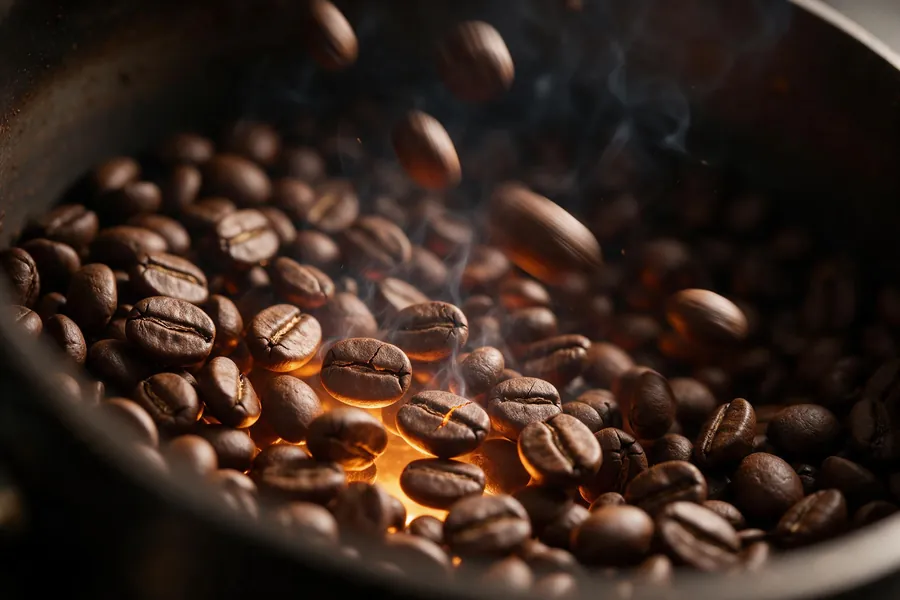
Green coffee is green, hard and tastes of grass. During roasting the water evaporates first, then from about 150 degrees sugars and amino acids turn into hundreds of aroma compounds in the Maillard reaction. From 170 degrees the sugar caramelises. At around 196 degrees the bean cracks open with an audible snap, the first crack, because steam and carbon dioxide raise the internal pressure too far. From this point the coffee is drinkable. At around 224 degrees the second crack follows, when the cell structure breaks down and oils come to the surface.
The scale
| Roast level | Temperature | Appearance | Taste |
|---|---|---|---|
| Cinnamon | 196 °C | light brown, matt, pale crease | sour, grassy, grain. Rarely drinkable. |
| City | 205 °C | light brown, matt | bright acidity, florals, fruit, tea. Classic for filter. |
| City+ | 210 °C | medium brown | acidity with sweetness, caramel begins. The modern all rounder. |
| Full city | 218 °C | medium to dark brown, first spots of oil | chocolate, nut, mild acidity. For espresso and filter. |
| Vienna | 225 °C | dark brown, slightly glossy | roast aromas, bittersweetness, hardly any acidity. Classic espresso. |
| French | 235 °C | very dark, oily | smoke, carbon, bitterness. The origin is no longer recognisable. |
| Italian | 245 °C | almost black, very oily | burnt, thin, ashy. Only with milk and sugar. |
What changes with the roast level
- Acidity falls with every degree. Chlorogenic acids break down and fruit acids are degraded.
- Sweetness rises up to the medium roast, because sugar caramelises, and then falls, because it burns.
- Bitterness rises continuously. From the second crack onwards, bitter compounds from burnt sugar and broken down chlorogenic acids dominate.
- Body is greatest at a medium roast. Dark roasts seem powerful but are thinner, because oils have left the bean and cells are destroyed.
- Solubility rises. Dark beans are porous and give everything up quickly, light beans are dense and need a finer grind, hotter water and more time.
- Caffeine stays practically the same. The bean loses weight, so dark coffee has marginally more per gram and marginally less per bean.
Which roast level for what
Pour over and drip machines are made for light to medium roasts, because those methods show their acidity and aromas. For straight espresso, medium roasts that balance sweetness and acidity work best. For cappuccino and latte it may go to full city or vienna, because milk covers the acidity and carries the roast aromas. French and italian are a tradition of taste, not a recommendation.
The label on the bag
Many roasters skip the classic names and write filter roast or espresso roast, light, medium or dark. A colour measurement with the Agtron value would be more honest, where 95 is very light and 25 very dark. The best clue is still the cup: if you taste the origin, the roast was light enough.
Try it out
Roast level explorerSlide the bean through the roast and see what changes at every degree.Common questions
Is dark coffee stronger?
In taste yes, in caffeine no. Dark roasts taste powerfully of roast aromas but hold no more caffeine than light ones.
Which roast level is healthiest?
Light roasts hold more chlorogenic acids, which count as antioxidants but can also irritate the stomach more. Dark roasts are gentler but poorer in those compounds. The difference is small.
What does full city mean?
A medium to dark roast level just before the second crack, when the first spots of oil appear on the bean. Typical of chocolatey espressos.
Share