First crack and second crack explained: what cracks inside the bean, at which temperature, how it sounds and what a roaster decides afterwards. The acoustic knowledge behind every roast.
In short
- First crack at 196 to 205 °C: steam bursts the bean open. It sounds like popcorn.
- Second crack at 224 to 230 °C: the cell walls break. It sounds like crackling paper.
- Almost the entire range in which good coffee is made lies between the two.
Roasters work with their eyes, their nose and above all their ears. Two sounds give every roast its structure, and once you have listened for them consciously you understand the scale of roast levels by yourself.
First crack
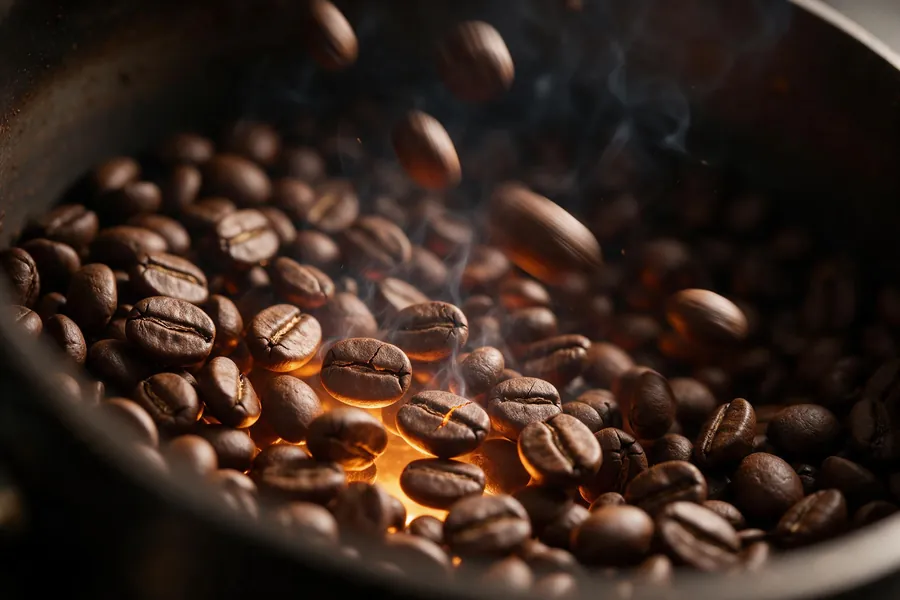
As the temperature rises, the residual water in the bean turns to steam, and carbon dioxide forms out of carbohydrates and acids. Both build pressure inside. The cell structure of the bean is tough, but at around 196 degrees it gives way: the bean bursts open along the centre crease, expands by up to 50 percent and becomes noticeably lighter. The sound is loud and irregular, like popcorn starting. Scattered at first, then in a wave, then scattered again. The whole of first crack lasts one to two minutes.
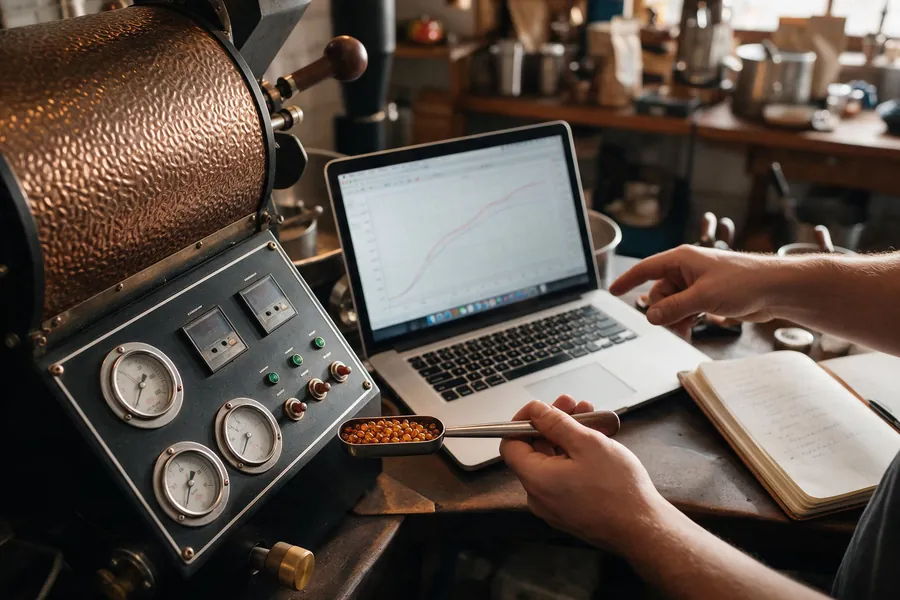
For the roaster, the start of first crack is the most important moment of the roast. From here the development time counts, and from here the coffee is in principle drinkable. Stop right at first crack and you get a very light roast with plenty of acidity and notes of grain. Most filter roasts end one to two minutes after it begins.
The gap
After first crack it goes quiet. In this phase, roughly from 205 to 224 degrees, the sugar caramelises, the acids are broken down and the bean becomes smoother and darker. This is the range of medium roasts, where most espressos and many all rounders sit. Here the roaster uses the heat to control how fast they run towards the target.
Second crack
At around 224 degrees second crack begins. This time it is not steam but the cell structure itself: the cell walls turn brittle and break, and the oils from inside the cells come to the surface. The sound is quieter, faster and denser than first crack, like crackling paper or rice crackling. From here it smells smoky and the roast moves fast. Run right through second crack and you have a french or italian roast: oily, dark, bitter, without origin.
What the roaster decides
- Stopping before first crack: only for cascara like experiments. The coffee is grassy and sour.
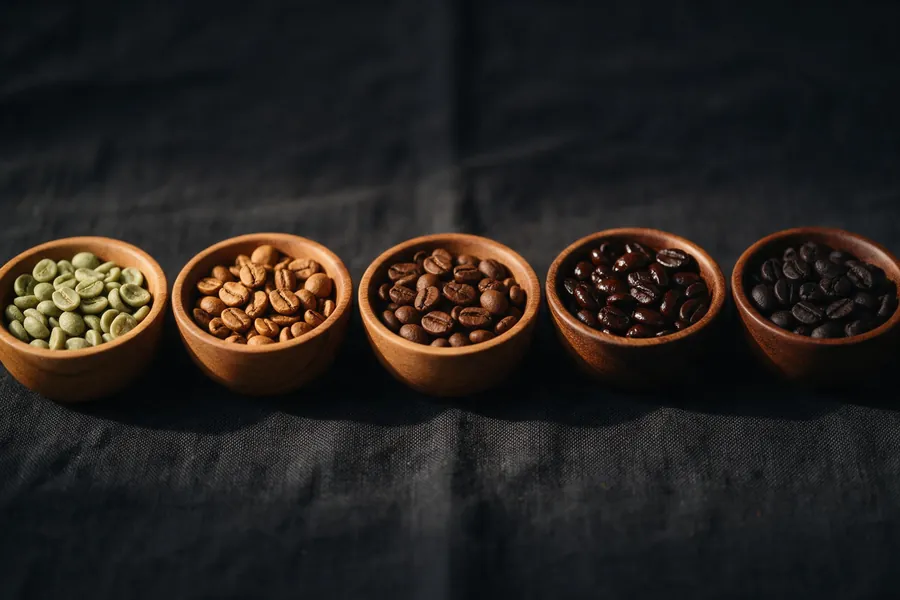
- Just after first crack: a light filter roast, maximum origin.
- Between the cracks: a medium roast, balance. The wide range where roasters find their style.
- Start of second crack: vienna, the classic dark espresso.
- Into second crack: french and italian. Tradition more than recommendation.
Try it out
Roast level explorerSlide the bean through the roast and see what changes at every degree.Common questions
At which temperature does first crack happen?
Depending on the coffee, its density and the probe, between 196 and 205 degrees bean temperature.
What does first crack sound like?
Like popcorn: loud, irregular snaps, scattered at first, then in a wave. Second crack is quieter and denser, like crackling paper.
Do you have to roast until second crack?
No. Almost all specialty coffees are stopped before second crack. Only dark espresso roasts go into it.
Share