Arabica and robusta compared: caffeine, acidity, growing altitude, yield, taste and price. Why robusta is not automatically bad and what 100 percent arabica on the pack really means.
In short
- Arabica: 60 percent of world production, fine acidity, half as much caffeine, delicate.
- Robusta: hardy, twice the caffeine, earthy and strong, plenty of crema, cheaper.
- 100 percent arabica is a promise about species, not about quality.
Almost every pack says 100 percent arabica, as if that were a seal of quality. In fact it is only a botanical statement. Arabica and robusta are two species of the genus Coffea, and both include magnificent and terrible coffees.
The plants
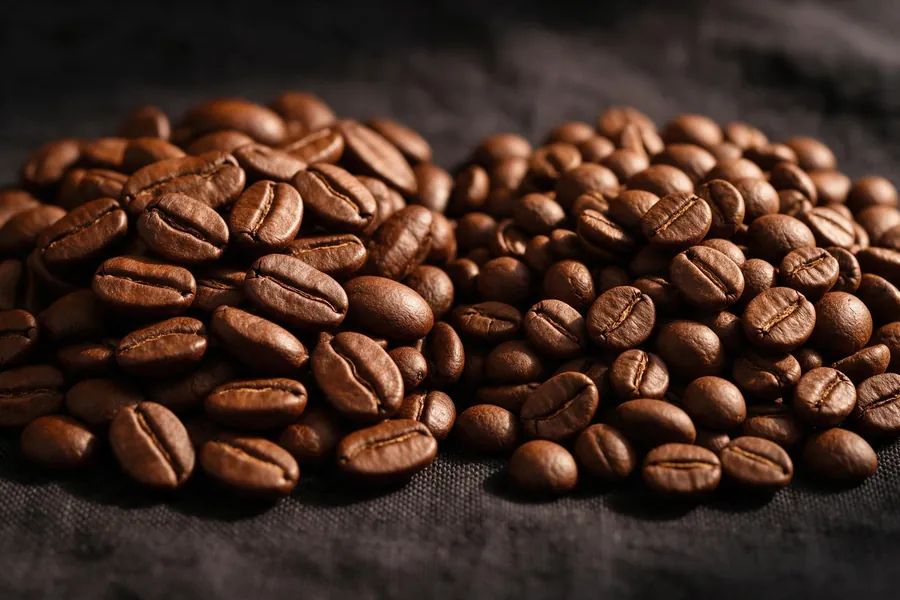
Coffea arabica comes from the highlands of Ethiopia. It grows best between 800 and 2,200 metres, at 15 to 24 degrees and with shade. It is self pollinating, has 44 chromosomes and is vulnerable to coffee leaf rust and pests. Its beans are elongated with a curved crease.
Coffea canephora, known as robusta, comes from the lowlands of central and west Africa. It grows below 800 metres too, tolerates heat and disease, needs cross pollination and carries more fruit per tree. Its beans are smaller, rounder and have a straight crease.
In the cup
Arabica contains almost twice as much sugar and clearly more oils than robusta. That gives sweetness, complex acidity and the aromas people associate with specialty coffee: berries, citrus, flowers, caramel. Robusta has more caffeine and more chlorogenic acids, which turn bitter during roasting. It tastes earthy, woody, strong, often with notes of dark chocolate or grain. Its foam is denser and darker, which is why it traditionally provides crema and power in Italian espresso blends.
Why robusta is cheaper
Robusta gives more yield per hectare, grows in regions with lower wages, can be harvested by machine and needs less care. Its world market price is therefore usually well below that of arabica. Large roasters use it for instant coffee, blends and capsules, where power and crema count.
The climate factor
Rising temperatures are pushing the arabica growing zones uphill, and up there space is running short. Robusta copes better with warmth. Breeders are working on hybrids and on old species such as Coffea stenophylla and liberica, which take heat and still taste fine. It is quite possible that in 30 years the coffee world will drink less arabica than it believes today.
What should be on the pack
- Species and variety: arabica is the species; bourbon, typica, gesha and caturra are varieties of it.
- Origin: country, region, ideally farm or cooperative.
- Processing: washed, natural or honey.
- Roast date: the most important date on the bag.
Common questions
Is robusta worse than arabica?
No, only different. Robusta is stronger, more bitter and higher in caffeine. High grade robustas are rare, but they exist, above all from India and Uganda.
Which coffee species has more caffeine?
Robusta, with 2.2 to 2.7 percent, has about twice as much caffeine as arabica with 1.2 to 1.5 percent.
What does 100 percent arabica mean?
Only that no robusta beans are included. It says nothing about origin, freshness or roasting quality.
Share