Caffeine in espresso, filter coffee, cold brew and cappuccino: the figures, what they depend on, how long caffeine works and how much a day is considered safe. With a caffeine calculator.
In short
- An espresso holds about 60 to 80 mg, a mug of filter coffee 90 to 140 mg.
- What matters is the amount of coffee, not how strong it tastes. A dark roast does not mean more caffeine.
- Up to 400 mg a day is considered safe for healthy adults, and the half life is around five hours.
Caffeine is the reason coffee became a ritual long before anyone talked about aromas. In the brain it blocks the docking sites of adenosine, the messenger of tiredness. What surprises many people: the amount in the cup depends less on the taste than on the amount of coffee you use.
The figures
| Drink | Serving | Caffeine |
|---|---|---|
| Espresso | 36 ml from 18 g | 60 to 80 mg |
| Cappuccino | 1 espresso plus milk | 60 to 80 mg |
| Filter coffee | 250 ml from 15 g | 90 to 140 mg |
| French press | 250 ml from 17 g | 100 to 150 mg |
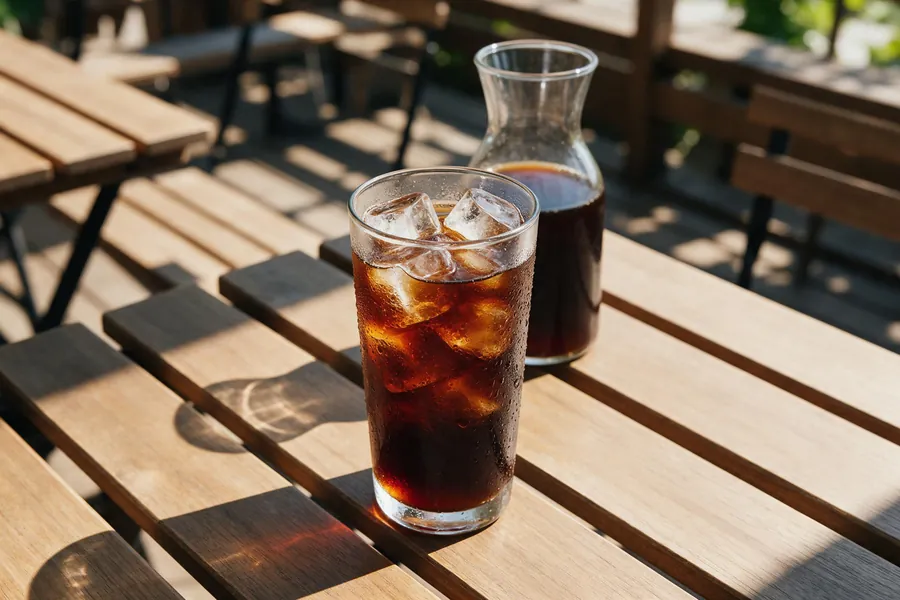
| Cold brew, diluted | 250 ml | 100 to 150 mg |
| Moka pot | 60 ml | 80 to 110 mg |
| Decaf | 250 ml | 2 to 5 mg |
What it depends on
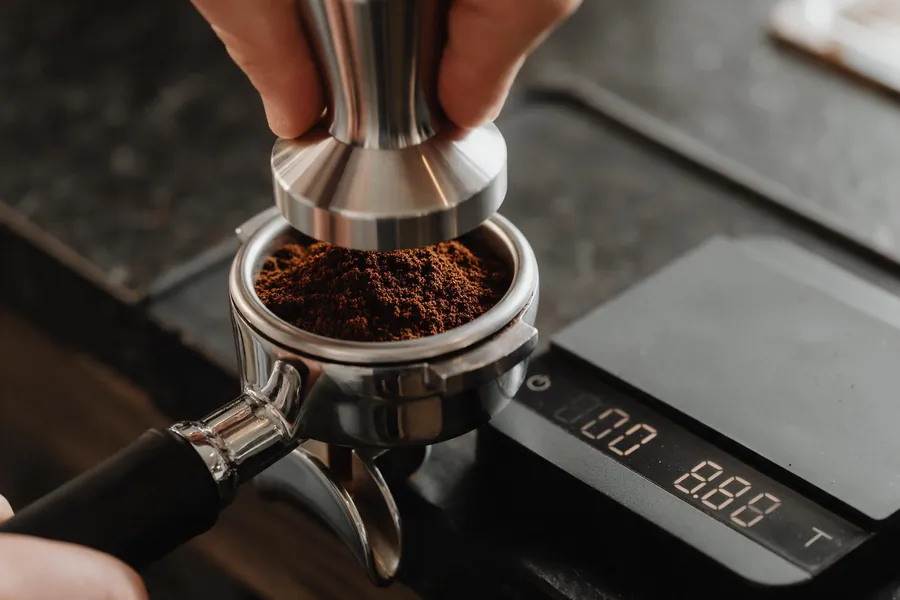
- Amount of coffee: The most important factor. 18 grams in an espresso basket hold around 200 milligrams of caffeine, and about 70 of them end up in the cup.
- Species: Robusta has roughly twice the caffeine of arabica. A blend with 30 percent robusta sits noticeably higher.
- Roast: Caffeine is heat stable. Dark roasts have marginally less per bean, because the bean gets lighter, but per gram there is hardly a difference. The strong taste is deceptive.
- Contact time: Caffeine dissolves early and fast. An espresso in 25 seconds already pulls out most of it. Long extractions add little.
How long it works
Caffeine is fully in the blood after 30 to 60 minutes and has a half life of about five hours. So an espresso at 4 pm is still half there at 9 pm. Anyone who is sensitive or sleeps badly stops in the early afternoon. How fast you break caffeine down is largely genetic. Smoking speeds up the process, pregnancy and some medicines slow it down considerably.
Decaf
Decaffeination removes the caffeine from green coffee with water, carbon dioxide or solvents until less than 0.1 percent is left. Good processes such as the Swiss Water method or the carbon dioxide method largely preserve the aroma. A decaffeinated coffee is allowed to taste excellent these days.
Common questions
Does espresso have more caffeine than filter coffee?
Per millilitre yes, per cup no. An espresso holds around 70 mg, a mug of filter coffee 90 to 140 mg, because much more coffee is used.
Does dark coffee have more caffeine?
No. Caffeine survives roasting almost unchanged. The stronger taste of dark roasts comes from roast aromas, not from caffeine.
How much caffeine a day is fine?
For healthy adults up to 400 mg a day is considered safe, which is about four to five espressos or three large mugs of filter coffee.
Share