The right grind for every method: espresso, moka pot, AeroPress, pour over, drip machine, french press and cold brew. With comparisons you can picture, rules for dialling in and the difference between flat and conical burrs.
In short
- The shorter the contact with water, the finer the grind.
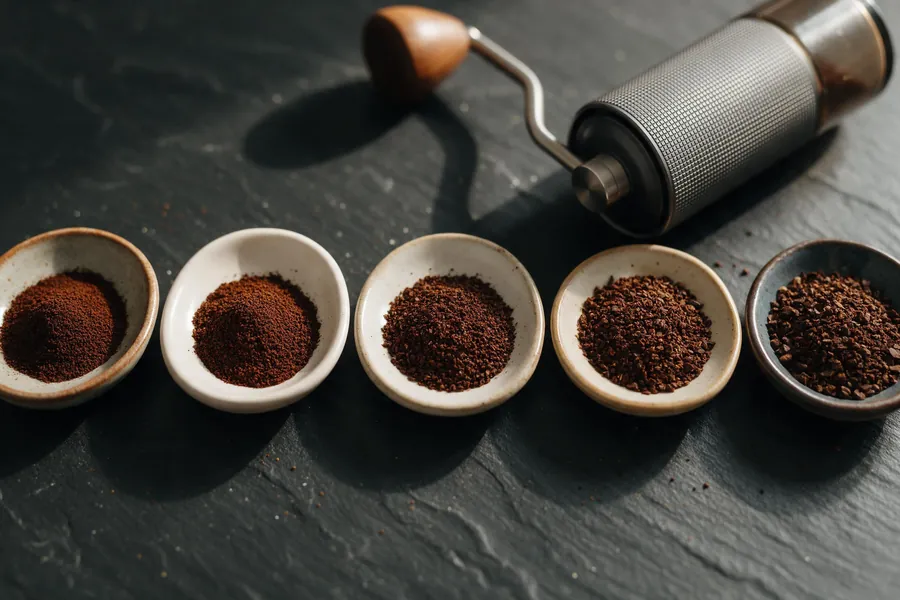
- Espresso like icing sugar with grit, pour over like coarse sand, french press like sea salt.
- Burrs are essential, blade grinders produce dust and boulders at the same time.
The grind decides how much surface the coffee offers the water. Finer means more surface and faster extraction. So the rule is: the shorter the water is in contact with the coffee, the finer you have to grind.
The scale
| Method | Grind | Compare to | Contact time |
|---|---|---|---|
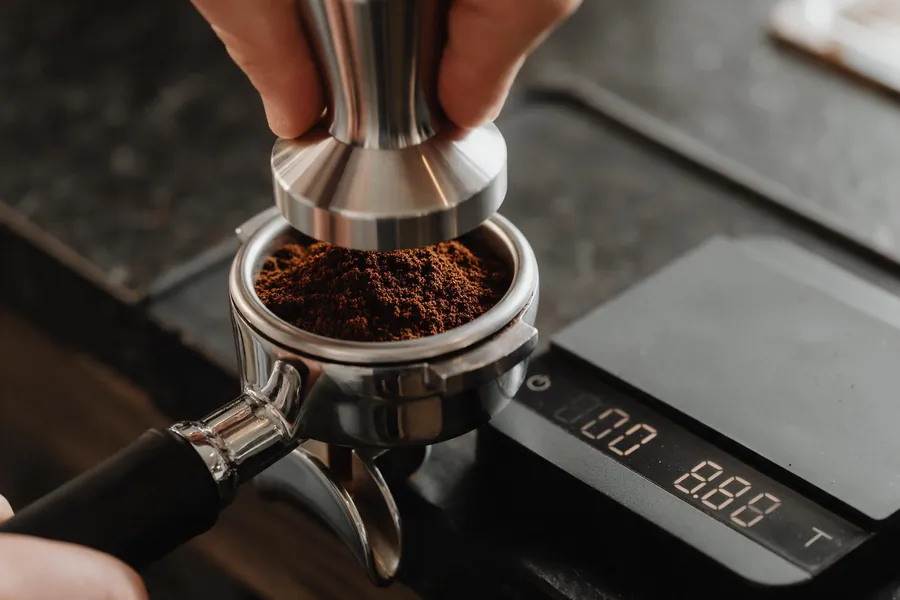
| Espresso | very fine | icing sugar with some grit | 25 to 30 s |
| Moka pot | fine | fine sand | 1 to 2 min |
| AeroPress | fine to medium | table salt | 1 to 2 min |
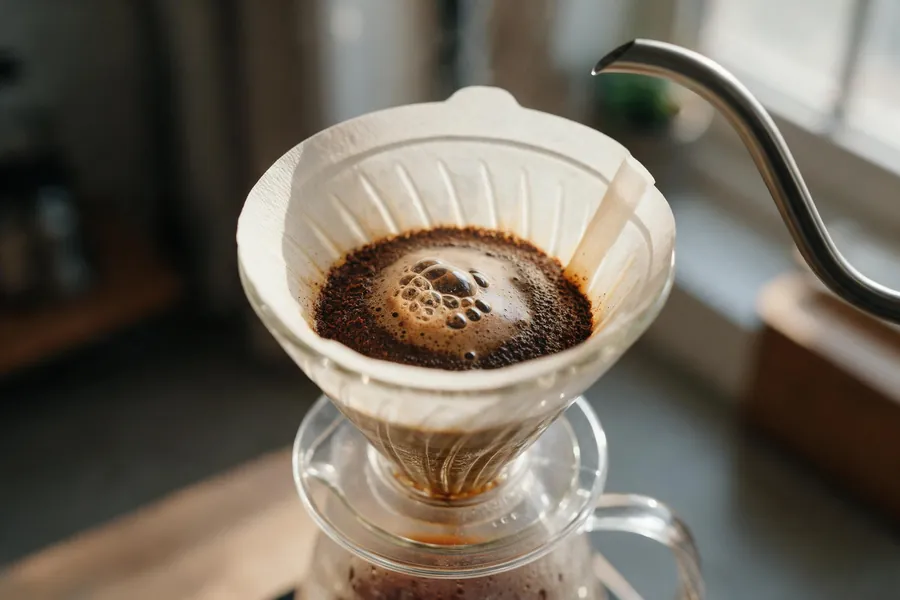
| Pour over | medium | coarse sand | 3 min |
| Drip machine | medium to coarse | coarse sand | 4 to 6 min |
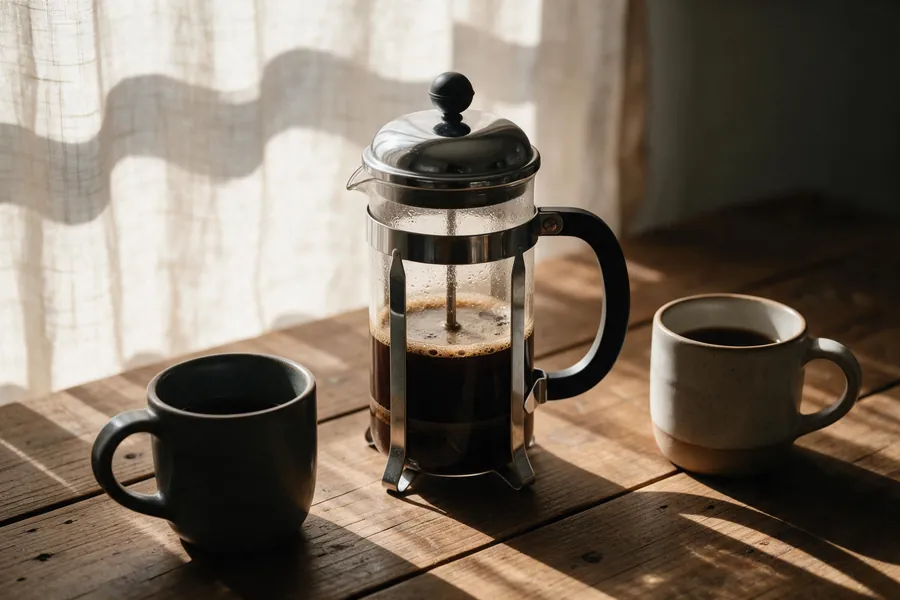
| French press | coarse | sea salt | 4 to 8 min |
| Cold brew | very coarse | breadcrumbs | 12 to 18 h |
Flat burrs, conical burrs or blades
A grinder with blades chops the beans at random. You get dust and boulders at once, and the two extract differently: the dust turns bitter, the boulders stay sour. A burr grinder crushes the bean between two surfaces set at a defined distance. The result is even, and that is exactly what you taste. Conical burrs are quieter and usual in hand grinders, flat burrs grind slightly more evenly and are common in electric grinders.
Dialling in
Never set the grind by feel, set it by the result in the cup. If the espresso or the filter runs through too fast: finer. Too slow: coarser. Only ever change one step and taste the next cup. Note the setting that worked for each bean.
When the grind shifts
- Fresh beans need a coarser grind than old ones.
- Dark roasts are more brittle and grind fine faster than light ones.
- In humid weather the coffee runs through more slowly, so go a touch coarser.
- Blunt burrs produce more dust. After about 500 kilograms with steel, much later with ceramic, it pays to replace them.
Cleaning
Coffee oils build up in the burrs and go rancid. Once a month brush the burrs out or run cleaning tablets designed for grinders through them. Rice is not suitable, it is too hard and can overload the motor.
Common questions
Which grind size for filter coffee?
Medium, roughly like coarse sand. For a drip machine with a long brew time, go a touch coarser than for a pour over.
Can I grind espresso with a hand grinder?
Yes, if the grinder is stepless or adjusts in very fine steps. It takes about a minute of cranking per double shot.
Why does ground supermarket coffee taste different?
It is usually ground as a compromise for drip machines and has lost many volatile aromas in storage. Grinding fresh from whole beans is the single biggest step towards better coffee.
Share