Espresso in 25 to 30 seconds: a 1:2 brew ratio, 18 grams in, 36 grams out, 93 degrees. How to dial in grind, dose and time, and how to tell why a shot tastes sour or bitter.
In short
- A 1:2 brew ratio as your starting point: 18 g of coffee, 36 g of espresso in 25 to 30 seconds.
- Change one variable at a time, and start with the grind.
- Sour means under extracted (grind finer), bitter means over extracted (grind coarser).
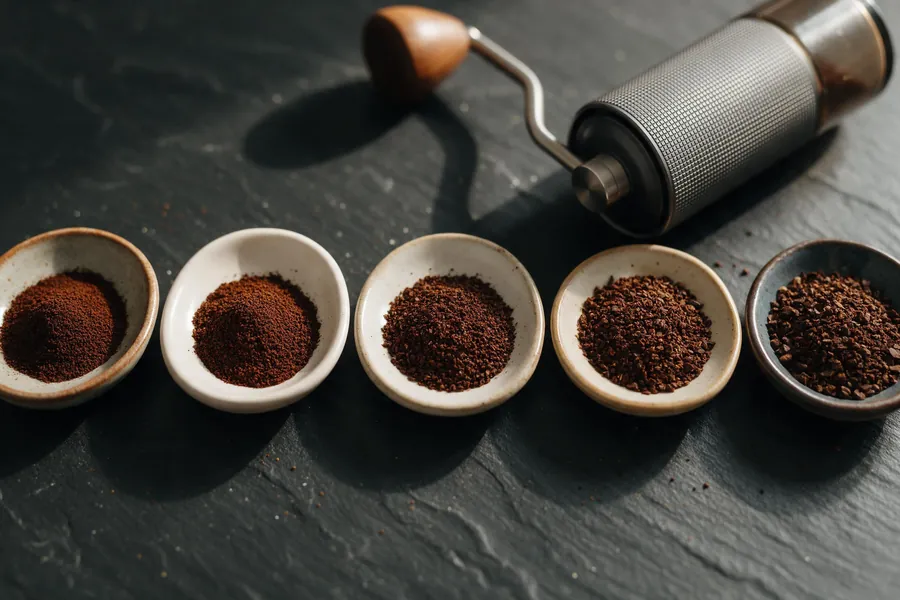
An espresso is a recipe with five ingredients: the amount of coffee, the amount of water, the time, the temperature and the grind. Four of them you can measure. The fifth, the grind, you feel your way towards. Once you understand that, you no longer need secret tips.
The basic recipe
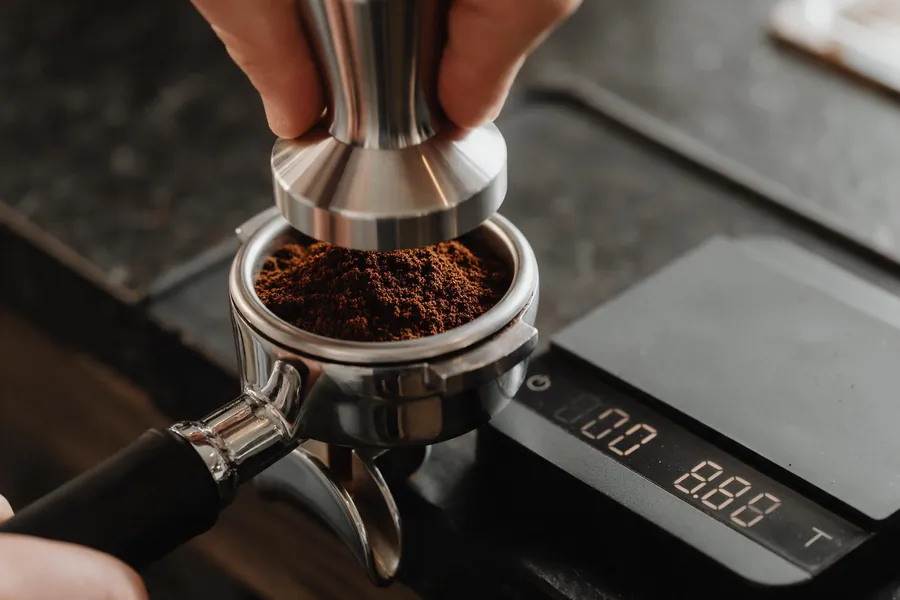
Start with a ratio of 1:2. That means 18 grams of ground coffee in the double basket and 36 grams of espresso in the cup, in 25 to 30 seconds from the moment the pump starts. A scale that shows tenths of a gram and a timer matter more here than any stainless steel accessory.
- Wipe the basket dry, grind 18 grams fresh, and level the coffee in the basket with a distribution tool or by tapping it gently.
- Tamp level, with calm pressure. How hard hardly matters, as long as it is the same every time.
- Lock in the portafilter, put the scale under the cup, start the pump and let the clock run.
- Stop at 36 grams. Note the time.
How to read the shot
The first drops should appear after six to ten seconds, dark and viscous like honey, then turn lighter and thinner. If it runs in a thin stream straight away, the grind is too coarse. If it is still dripping after 15 seconds, it is too fine.
Sour or bitter?
If the espresso tastes sour, sharp and thin, the water has dissolved too little from the coffee. That is called under extraction. Grind finer or extend the time. If it tastes bitter, dry and ashy, the water has dissolved too much. Grind coarser or stop earlier. Bitter and sour at the same time points to channeling: the water has found a tunnel through the coffee puck. Better distribution before tamping is what helps then.
Temperature and roast
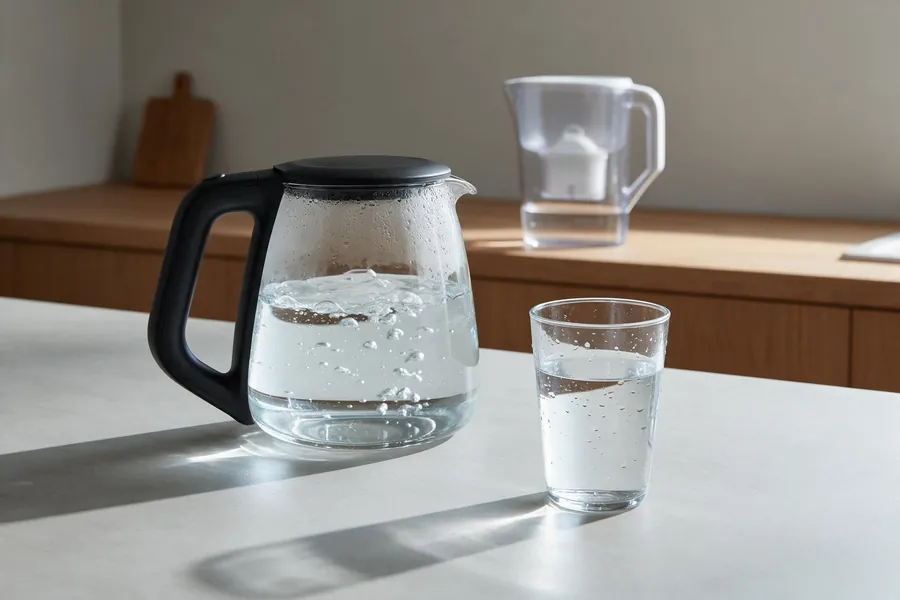
Light roasts need more heat, 94 to 96 degrees, because their cell structure is denser. Dark roasts are more porous and turn rounder at 90 to 92 degrees. If your machine has no temperature setting, a blank shot before the real one lets you bleed off or build up a little heat.
When the recipe stops fitting
Freshly roasted beans degas. In the first five to seven days after the roast date you get plenty of crema, but the shot runs restlessly. From day ten it becomes more stable. From about week five you have to grind finer again, because the bean is drying out. Note the roast date and the grinder setting and you will find your way back quickly every time.
The most common mistakes
- Pre ground coffee: After ten minutes the volatile aromas are gone. Without your own grinder, a good espresso is a matter of luck.
- A cold cup: An espresso weighs 36 grams. A cold cup takes ten degrees off it instantly.
- Impatience: An espresso machine needs 15 to 25 minutes before boiler and group head are warm.
Common questions
How many grams of coffee go into an espresso?
A double basket takes 16 to 20 grams, with 18 grams as a starting point. Single baskets with seven to nine grams are much harder to extract evenly.
Why does my espresso have no crema?
Usually the coffee is too old or ground too coarse. Crema comes from the carbon dioxide in freshly roasted beans. Six weeks after the roast date there is barely any of it left.
How long should an espresso run?
25 to 30 seconds for 36 grams out of 18 grams. Light roasts may also run 32 to 35 seconds.
Share