Brazil grows every third coffee bean in the world. Minas Gerais, Cerrado Mineiro and Mogiana in portrait: flat plantations, mechanical harvesting, natural and pulped natural, and the typical profile of nut, chocolate and little acidity.
Flavour profile
Typical notes
HazelnutMilk chocolateCaramelPeanutRed apple
Harvest
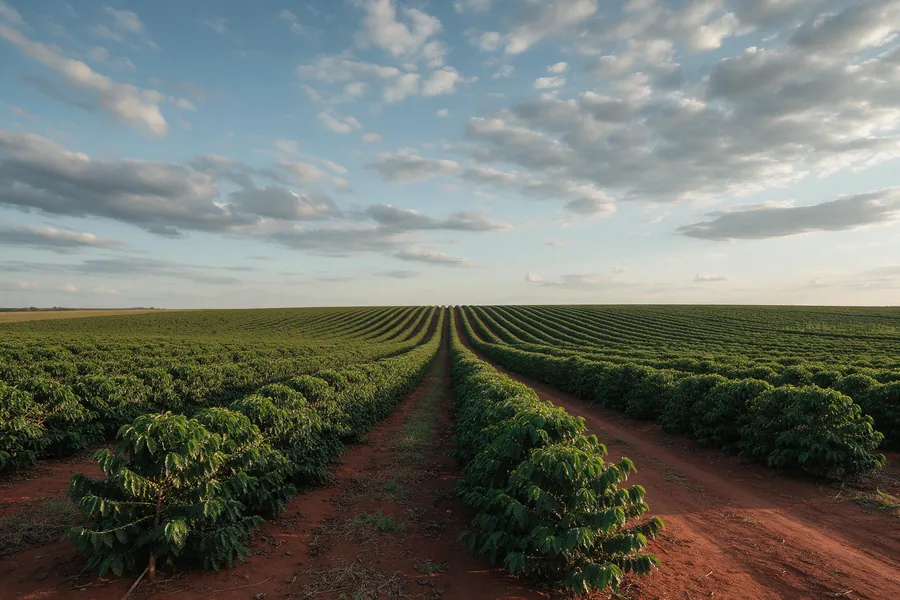
Brazil is the counterpart to Ethiopia: wide, flat plantations instead of forest gardens, harvesting machines instead of hand picking, often only 900 metres instead of 2,000. And still the coffees that the world loves come from here, because they do what a coffee should do in the morning: taste of nut, chocolate and sweetness, without edges.
The regions
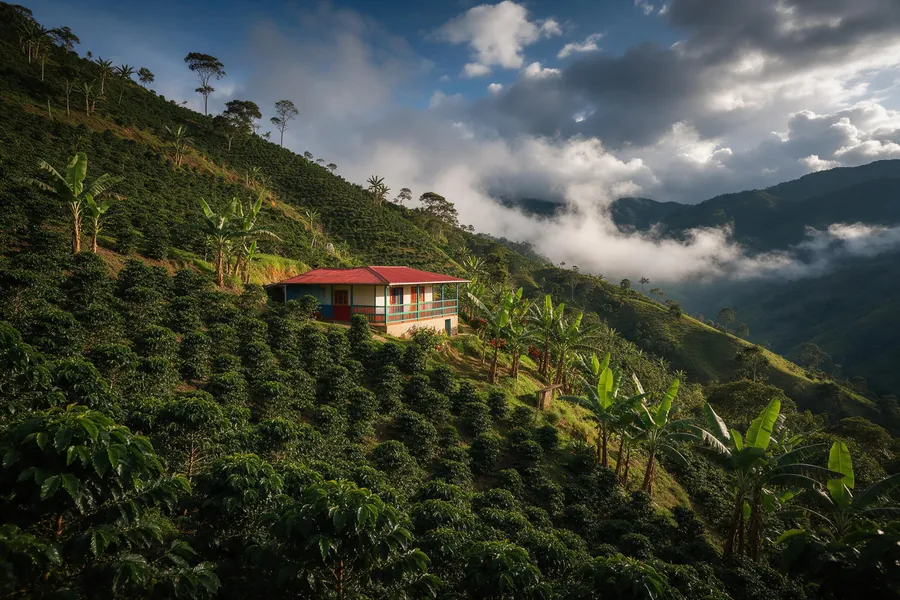
Minas Gerais delivers half of the Brazilian crop. The Cerrado Mineiro is a plateau with dry winters and clearly separated seasons, ideal for naturals with nut and caramel. The Sul de Minas is hillier and sweeter, and the Mogiana on the border with São Paulo delivers full bodied coffees with chocolate. The Chapada Diamantina in Bahia and Espírito Santo also grow large volumes of robusta, called conilon here.
Processing
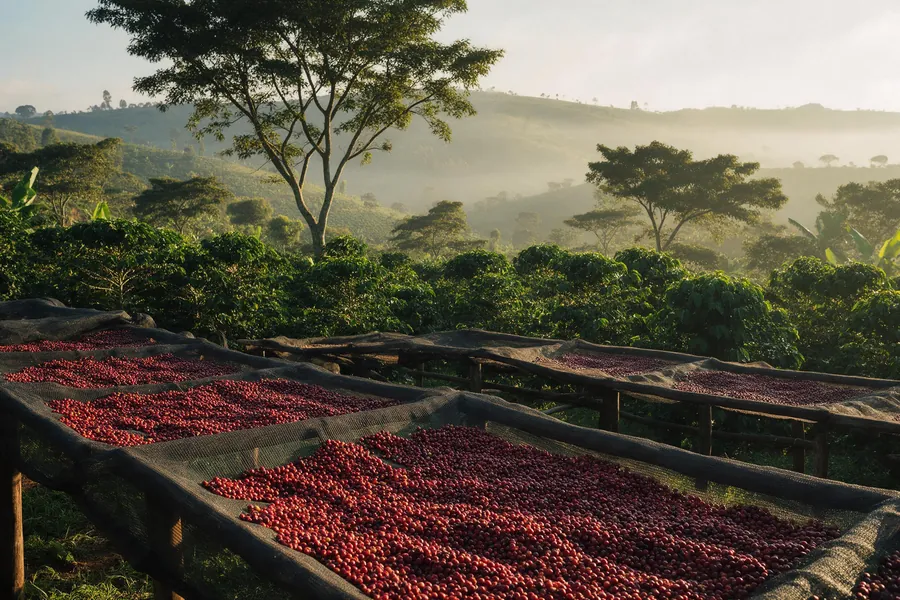
Brazil dries most of its crop inside the whole fruit on patios, the natural method. The dry climate after the harvest makes that possible, and the coffee takes on sweetness and body in the process. In pulped natural, also called honey, the skin is removed while the pulp stays on the bean during drying. The result is cleaner than a natural and sweeter than a washed coffee.
Harvest
From May to September, in the dry season. On the flat plantations harvesting machines drive through the rows and shake the cherries off. That is cheap, but the machine does not tell ripe from unripe. Specialty farms therefore pick by hand or sort optically after the harvest.
Why Brazil is in every espresso blend
Little acidity, plenty of body, plenty of sweetness, consistent quality and a good price: Brazil is the base of most Italian espresso blends. It carries the crema and the chocolatey core, while coffees from Central America or Africa add the fruit. With milk, Brazil also works better than almost any other origin.
The other side
Brazil sets the world market price. A frost in Minas Gerais, as in 2021, pushes the coffee price up worldwide. And the expansion of plantations into the cerrado has cost savanna that is missing as a carbon store. When buying, it is worth looking at certificates and direct imports.
Common questions
What does Brazilian coffee taste like?
Nutty, chocolatey and sweet with little acidity and full body. Ideal for espresso and milk drinks.
What is pulped natural?
A Brazilian process in which the skin is removed but the pulp stays on the bean during drying. Comparable to the honey method in Central America.
Share