Guatemala grows some of the most complex coffees in Central America. Antigua, Huehuetenango and Atitlán in portrait: volcanic soils, eight growing regions, bourbon and caturra, and a profile of cocoa, apple and spice.
Flavour profile
Typical notes
CocoaGreen appleBrown sugarCinnamonOrange
Harvest
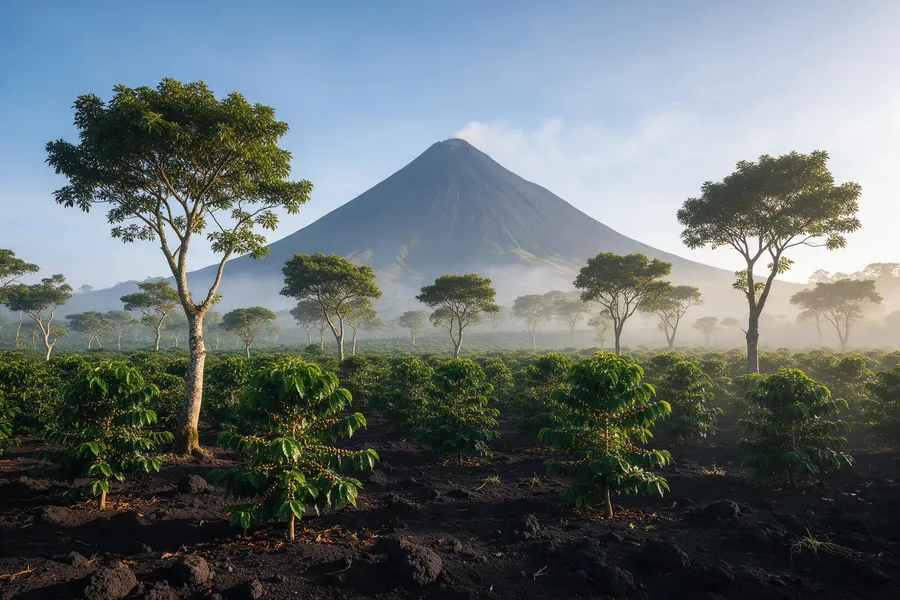
Three volcanoes frame the town of Antigua, and their ash has lain on the fields for centuries. Guatemala is a small country with eight official coffee regions that differ in climate, soil and taste as clearly as wine sites do.
The regions
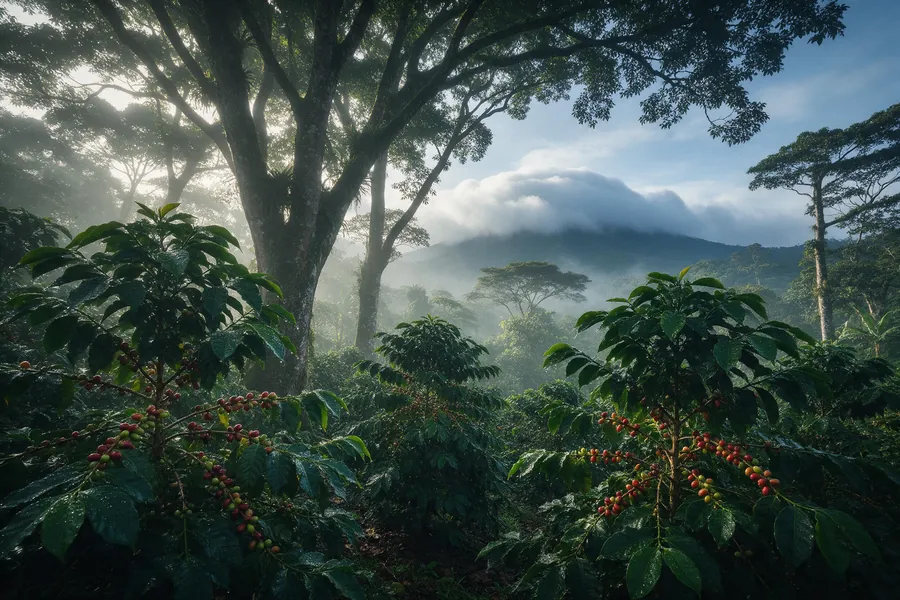
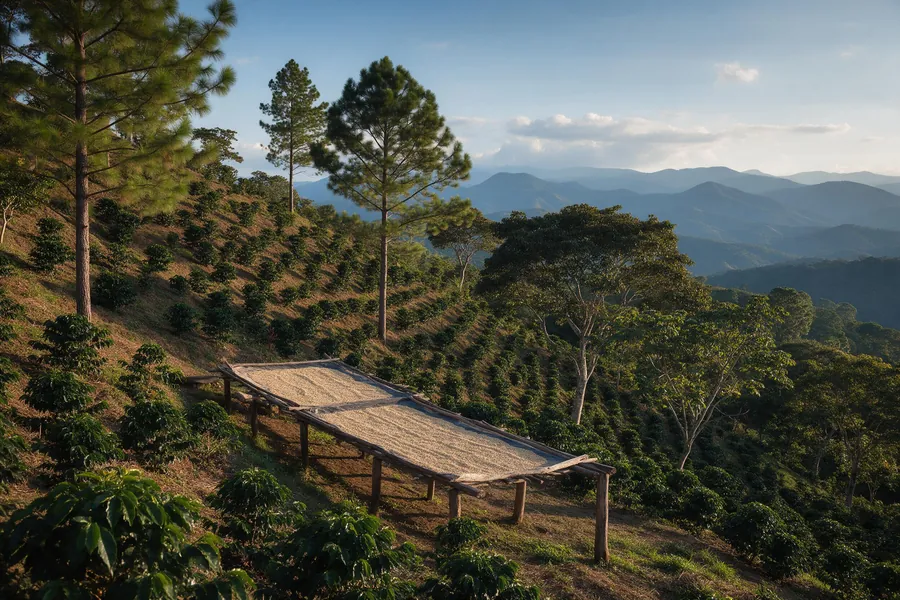
Antigua lies in a valley between the Agua, Fuego and Acatenango volcanoes. The ash makes the soil rich in minerals, and the valley holds the warmth. The coffees are full bodied, chocolatey, with fine acidity and a hint of smoke. Huehuetenango in the north west is the highest and driest region, up to 2,000 metres, without volcanoes, with warm winds from Mexico that keep frost away. The fruitiest coffees in the country come from here, with apple, orange and wine. Atitlán sits on the shore of the crater lake of the same name, with high humidity and coffees full of citrus and sweetness. Then there are Cobán with its cloud forest, Fraijanes, San Marcos, Acatenango and Nuevo Oriente.
The farms
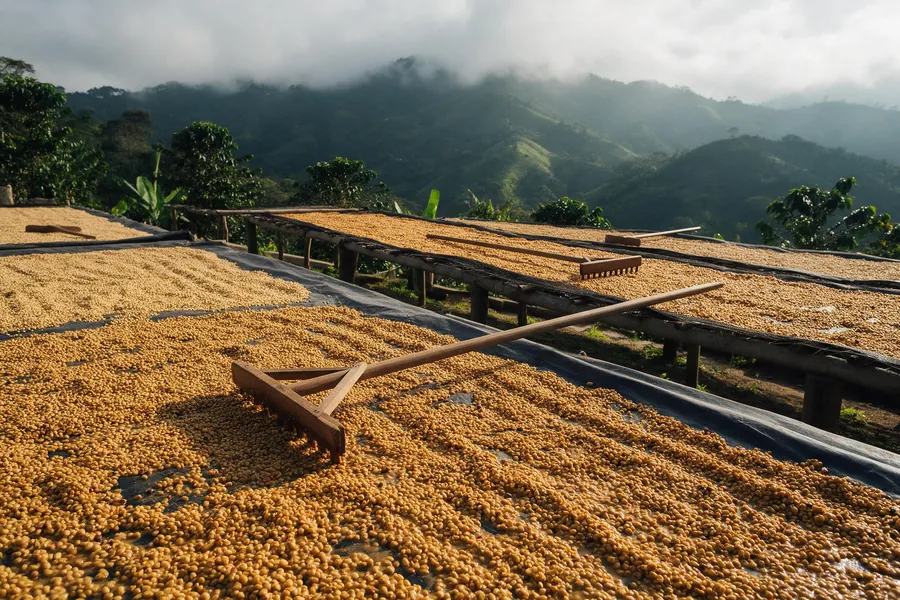
Guatemala is shaped by fincas, mid sized estates with their own beneficio that process their coffee themselves. Many of them have been family owned since the 19th century. Alongside them, tens of thousands of smallholders, often from Maya communities in the highlands, deliver to cooperatives. Almost everything is washed and dried in the sun or in drum dryers.
Varieties
Bourbon is the classic variety and provides the sweetness, caturra and catuaí bring yield, and pache is a local typica mutation with compact growth. Huehuetenango increasingly grows gesha and maragogype, the giant elephant bean.
In the cup
Guatemala is a coffee for people who want both: the body and chocolate of Brazil and the acidity and fruit of Africa. Roasted medium it is an excellent all rounder for filter and espresso. Antigua leans towards cocoa and brown sugar, Huehuetenango towards apple and spice.
Common questions
What does coffee from Guatemala taste like?
Full bodied and chocolatey with clear acidity. Antigua leans on cocoa, Huehuetenango is fruitier with apple and orange.
What is special about Antigua coffee?
The volcanic ash in the soil, the sheltered valley and the old bourbon trees give coffees with body, sweetness and a fine note of smoke.
Share