Indonesia grows the earthiest coffees in the world. Sumatra, Java and Sulawesi in portrait: the unique giling basah process, Mandheling and Gayo, robusta in the lowlands and a profile of cedar, tobacco and dark chocolate.
Flavour profile
Typical notes
CedarTobaccoDark chocolateForest floorSpices
Harvest
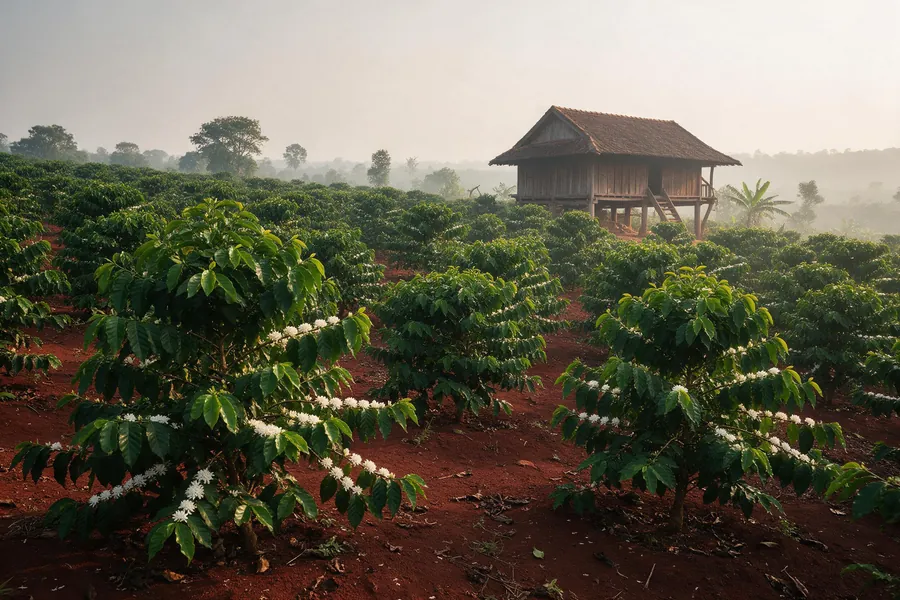
You either love Indonesian coffee or you do not get it. It tastes of forest, wood, tobacco and dark chocolate, has almost no acidity and a body like syrup. The reason is less the plant than the processing, which exists in this form only here.
Giling basah
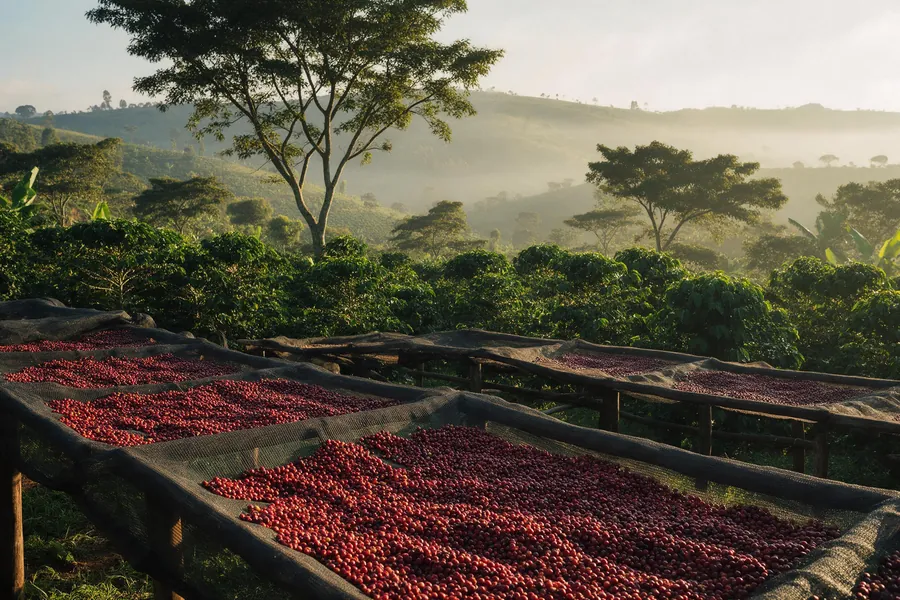
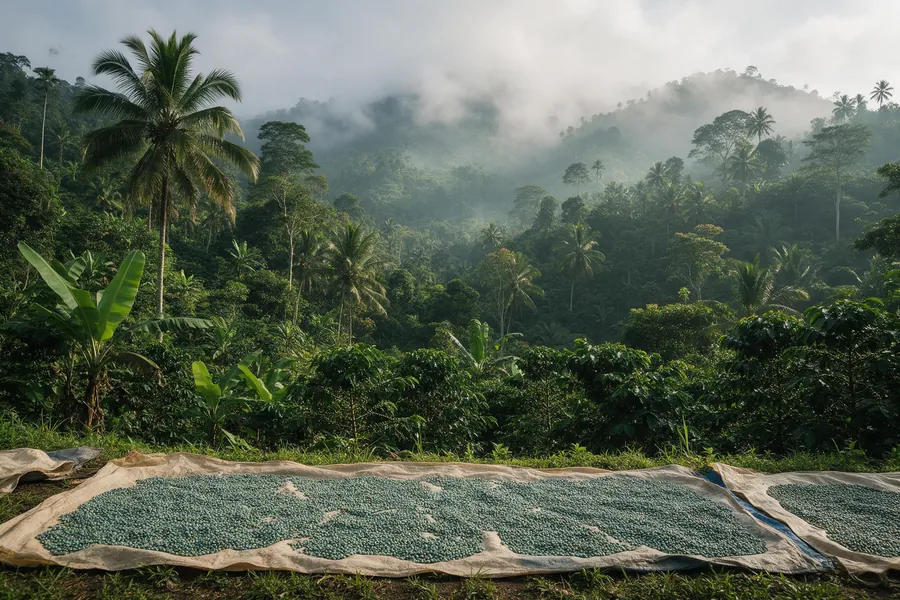
Sumatra is too humid to dry coffee calmly. Farmers depulp the cherries, let them ferment briefly and sell the still wet parchment coffee with 30 to 50 percent moisture to traders. Those remove the parchment straight away, while the bean is still soft, and finish drying the naked green coffee. The process is called giling basah, wet hulling. The beans turn a bluish green in the process and take on their earthy, heavy character. It is not a fault, it is a style.
The islands
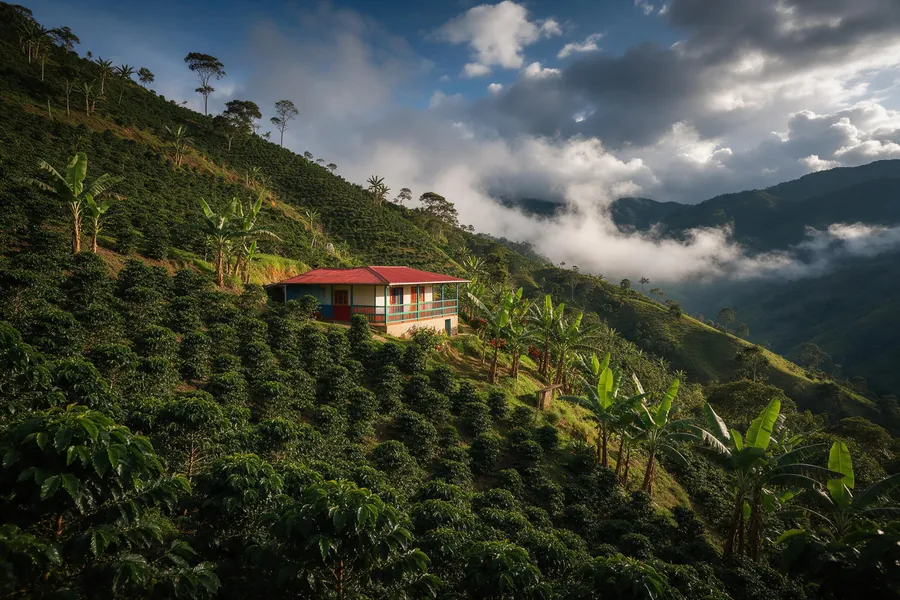
Sumatra is the heart: Mandheling from the north near Lake Toba, Gayo from the Aceh highlands, Lintong. All giling basah, all heavy and spicy. Java has a colonial history of large state plantations and washed coffees that are cleaner and milder. Sulawesi delivers washed and wet hulled coffees from Toraja with more sweetness and spice. Bali and Flores are smaller and increasingly produce for the specialty market. In the lowlands of Sumatra, Java and Lampung grows the robusta that makes Indonesia the fourth largest producer.
Kopi luwak
The famous civet coffee, whose beans have passed through the digestive tract of a civet, comes from Indonesia. What started as a curiosity involving wild animals is today mostly caged animals, animal suffering and no gain in flavour. We advise against it.
In the cup
Indonesian coffees are the base of many dark roasts and espresso blends, because they give body and take away acidity. As filter coffee they are unusual but exciting: cedar, tobacco, spices, a long dry finish. With milk they turn into chocolate. Anyone looking for fruit acidity should look elsewhere.
Common questions
What is giling basah?
The Indonesian process in which the parchment is removed from still moist coffee. It creates the earthy, heavy character of Sumatran coffees.
What does coffee from Sumatra taste like?
Earthy, woody, with dark chocolate, tobacco and spices, very little acidity and a great deal of body.
Share