Vietnam is the second largest coffee producer in the world and grows 40 percent of all robusta. The Central Highlands, Dak Lak and Lam Dong in portrait: basalt soil, irrigation, fine robusta, arabica from Da Lat and the Vietnamese coffee culture of the phin and condensed milk.
Flavour profile
Typical notes
Dark chocolateGrainNutSmokeBrown sugar
Harvest
Before 1990 Vietnam played no part in the coffee market. Then, in a single decade, the country planted hundreds of thousands of hectares of robusta in the Central Highlands, and today every sixth coffee bean in the world comes from here. The instant coffee on the supermarket shelf, the cheap capsule, the strong roast: very often Vietnam is in there without being named.
The Central Highlands
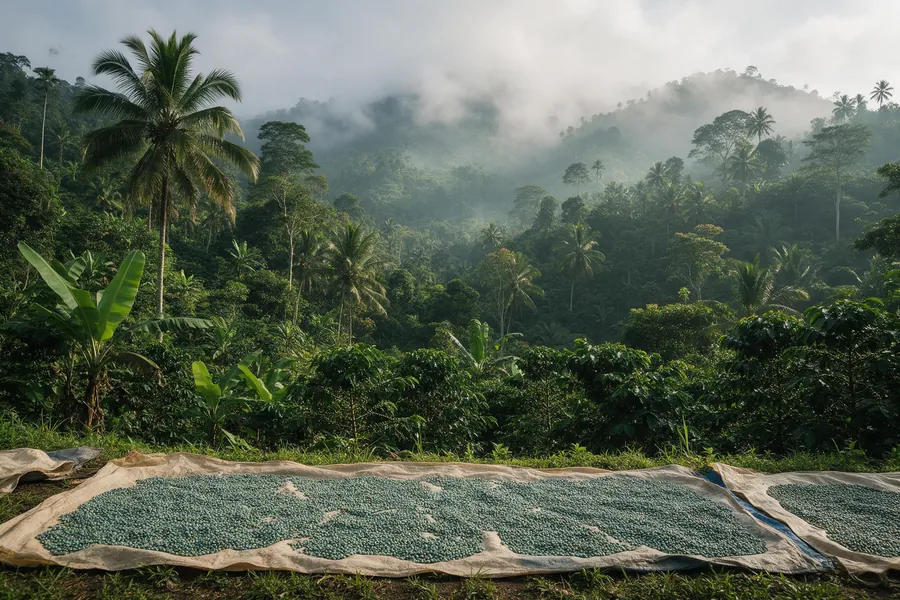
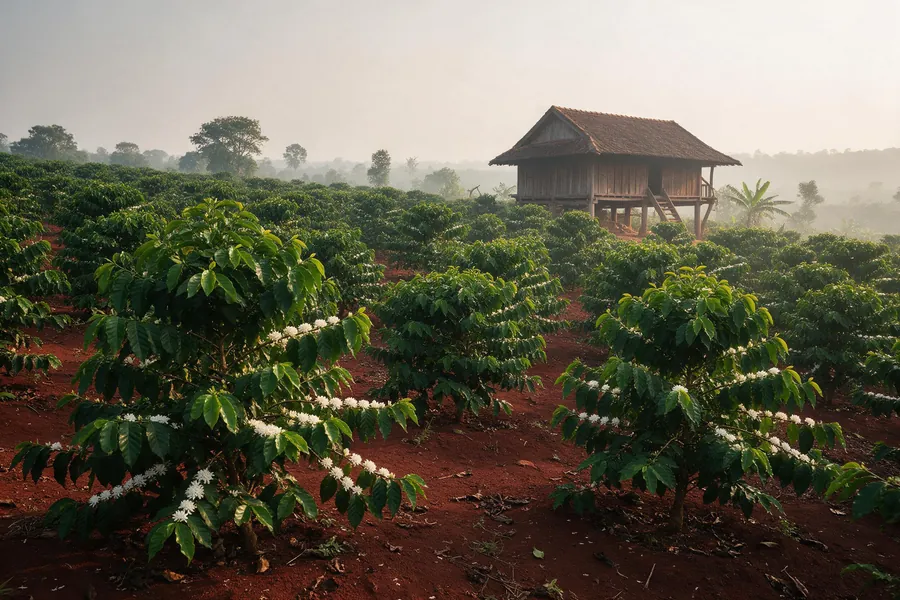
The provinces of Dak Lak, Gia Lai, Dak Nong and Lam Dong sit on a basalt plateau between 500 and 1,000 metres. The soils are deep and fertile, and the climate has a clear dry and rainy season. Robusta needs irrigation here in the dry season, which leads to water shortages. The farms are small, one or two hectares, and deliver naturals that dry on concrete yards. Buon Ma Thuot in Dak Lak is the coffee capital of the country.
Fine robusta
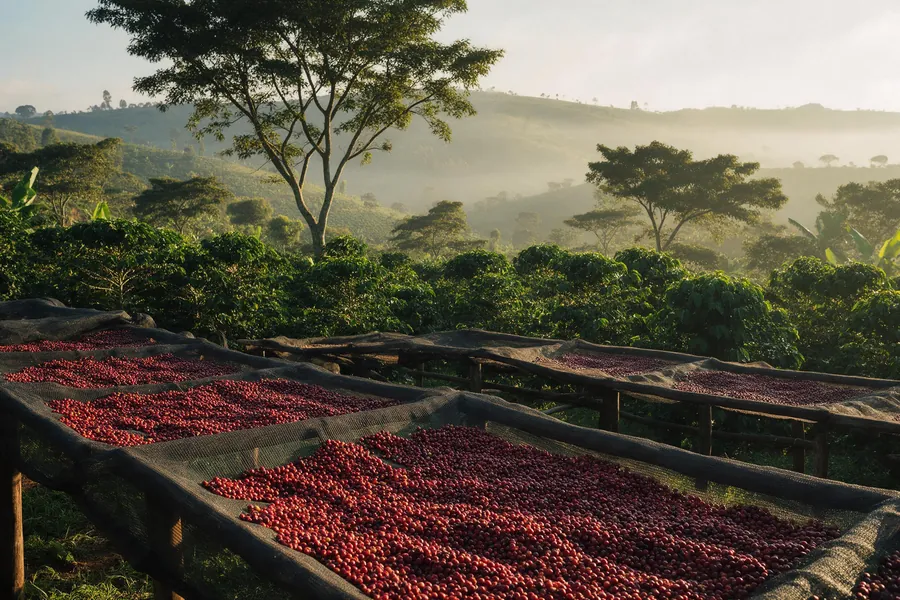
For a long time it was all about volume. Since around 2015 a movement has grown that treats robusta like arabica: selective picking of ripe cherries, washed and honey processing, controlled drying. The result, called fine robusta, tastes of dark chocolate, brown sugar and nut, without the bitterness and rubbery taste of poor robustas. For espresso with milk it is a serious alternative.
Arabica from Da Lat
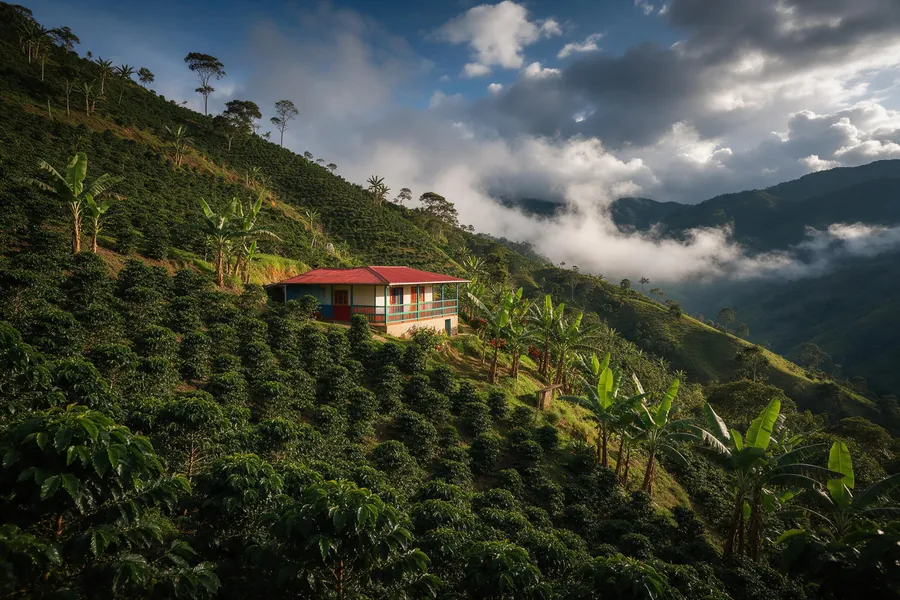
Around Da Lat in Lam Dong, at 1,500 metres, grows the best arabica in the country: catimor, and increasingly bourbon and typica. The coffees are mild and sweet, with notes of milk chocolate and apple, and now reach specialty level.
The coffee culture
Vietnam drinks its coffee differently. In the phin, a small metal filter, dark roasted robusta drips onto sweetened condensed milk: cà phê sữa đá, cold with ice, is the national drink. Hanoi has egg coffee with whipped yolk, Saigon salt coffee with salted cream. All of it strong, sweet and built on robusta.
In the cup
Classic Vietnamese robusta is dark, heavy and bitter, with grain and smoke. Fine robusta, by contrast, is chocolatey and dense with a gentle sweetness. Both give a stable, dark crema. As filter coffee robusta is unfamiliar; as espresso with milk and in cold brew it works very well.
Common questions
What is cà phê sữa đá?
Vietnamese iced coffee: dark roasted robusta dripped through a phin filter onto sweetened condensed milk and served over ice.
What is fine robusta?
Robusta treated like specialty arabica: ripe picking, clean processing, careful drying. It tastes chocolatey and sweet instead of bitter.
Share