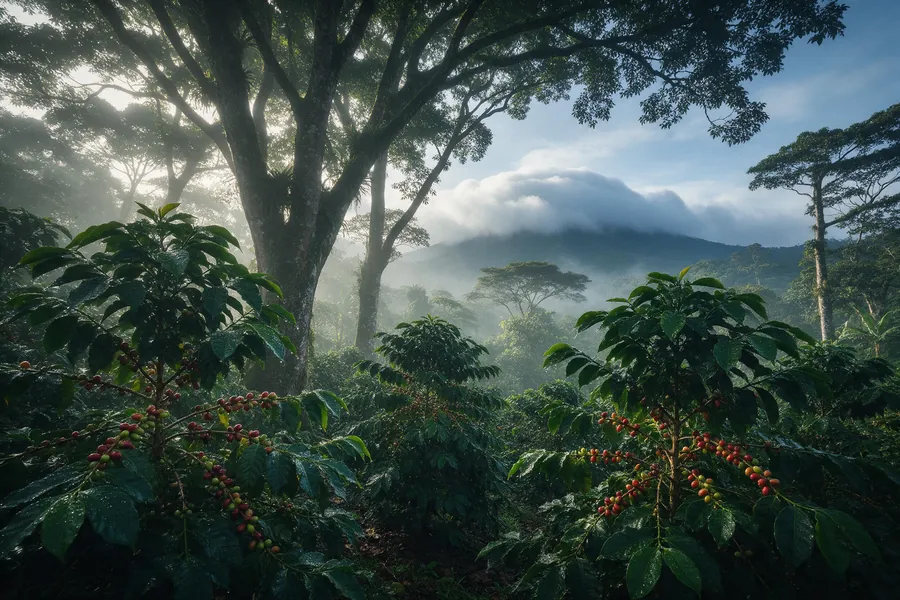
Costa Rica banned robusta by law and invented the micro mill movement. Tarrazú, West Valley and Central Valley in portrait: honey processing in every colour, varieties such as villa sarchí and a profile of honey, peach and citrus.
Flavour profile
Typical notes
HoneyPeachMandarinCane sugarRedcurrant
Harvest
Costa Rica produces little coffee, but hardly any country has shaped the specialty market as much. In 1989 the government banned growing robusta by law, to protect the country's reputation. And in the 2000s families stopped delivering their harvest to the big mills and started processing it themselves. The micro mill was born, and with it the idea that a farm can have a taste of its own.
Honey in every colour
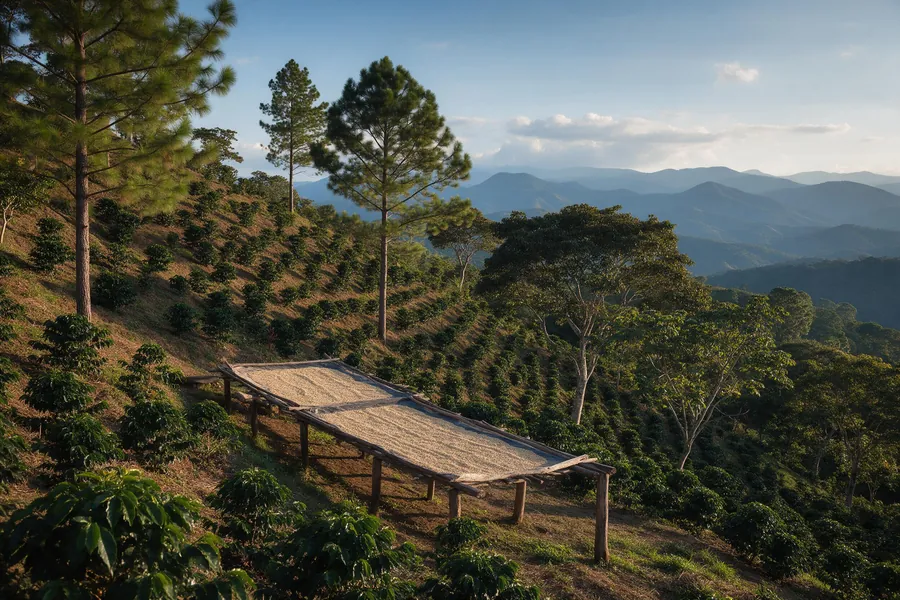
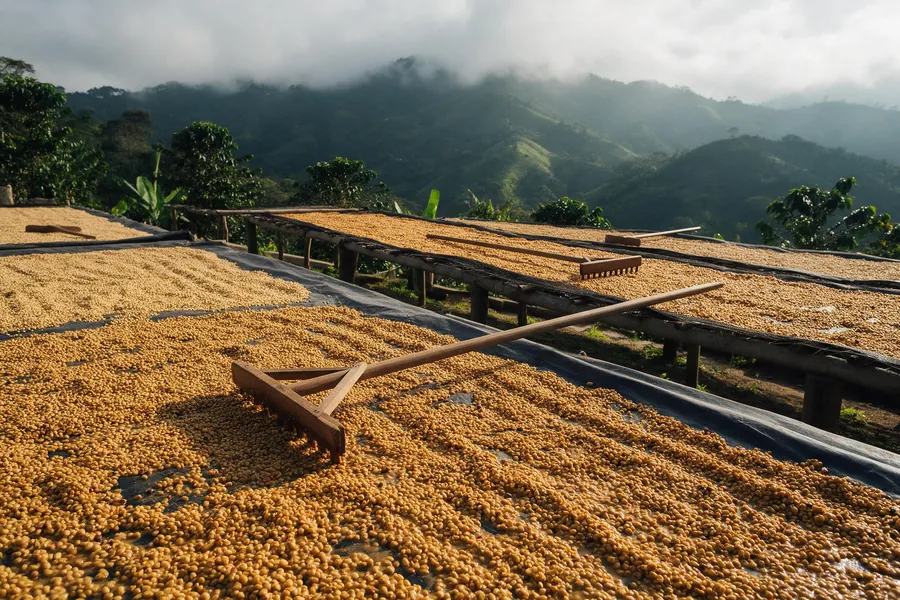
Costa Rica has turned honey processing into an art form. After depulping, part of the pulp, the mucilage, stays on the bean and dries with it. The more mucilage and the slower the drying, the darker the colour and the more intense the taste: white honey is almost like a washed coffee, yellow honey sweet and clean, red honey fruity, black honey deep, winey, almost like a natural. On a micro mill the coffee dries on raised beds under roofs, where it is turned several times a day.
The regions
Tarrazú south of the capital is the best known region: steep slopes up to 1,900 metres, a clear dry season, coffees with citrus, honey and lively acidity. The West Valley around Naranjo and Grecia is the home of the micro mill movement and of the villa sarchí variety. The Central Valley is the oldest coffee land in the country, with volcanic soils and balanced coffees. Then there are Tres Ríos, Brunca, Orosi, Turrialba and Guanacaste.
Varieties
Caturra and catuaí dominate, together with the local bourbon mutation villa sarchí. For auctions, farms grow gesha, SL28 from Kenya and more and more old typica lines.
In the cup
Costa Rica is clean, sweet and bright. Washed Tarrazús show mandarin and cane sugar, honeys turn rounder and peachy, naturals tropical. As filter coffee they are a treat; as espresso they need a medium roast so that the acidity does not dominate.
Price and ethics
Costa Rica has the highest labour costs in Central America, which is why the coffee costs more. In return, traceability is exemplary: many micro mills sell directly to roasters, and the bag names the farm, the lot and the variety.
Common questions
What is a micro mill?
A small processing plant on the farm itself. The family depulps, ferments and dries its own coffee and sells it directly to roasters.
What does honey mean in Costa Rican coffee?
A process in which part of the pulp stays on the bean during drying. The colour steps white, yellow, red and black describe how much pulp is left and how long the drying takes.
Share