Ethiopia is the home of the arabica plant. Yirgacheffe, Sidamo and Guji deliver floral, citrus fresh coffees from forest gardens at 1,700 to 2,200 metres. Harvest, processing, aromas and varieties in one portrait.
Flavour profile
Typical notes
BergamotJasmineBlueberryLemonBlack tea
Harvest
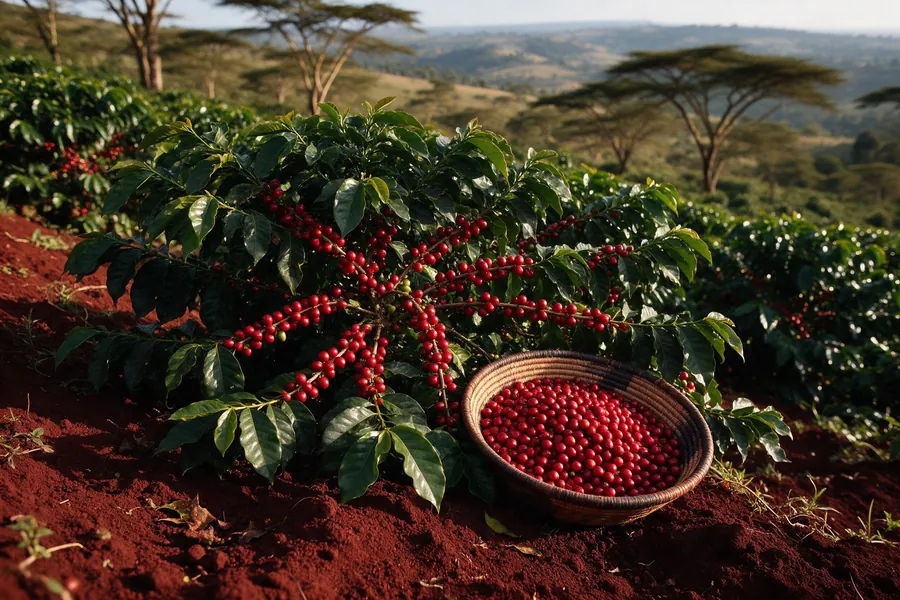
Nowhere else does coffee grow the way it originally grew: as understorey in mountain forests, without rows, without fertiliser, between enset plants and shade trees. Ethiopia has several thousand wild varieties, most of them never classified. People call them heirloom. And you taste them: no other country delivers coffees that taste so much of blossom and tea.
The regions
Yirgacheffe is the most famous origin: washed coffees with bergamot, jasmine and lemon, light in body, as clear as a tea. Sidamo surrounds Yirgacheffe and is a little rounder and sweeter. Guji in the south has been delivering the most exciting naturals with blueberry and tropical fruit for some years. In the west lie Jimma and Limu, where the coffee turns spicier and heavier, and right in the east Harrar, whose sun dried beans taste of wine and chocolate.
Processing
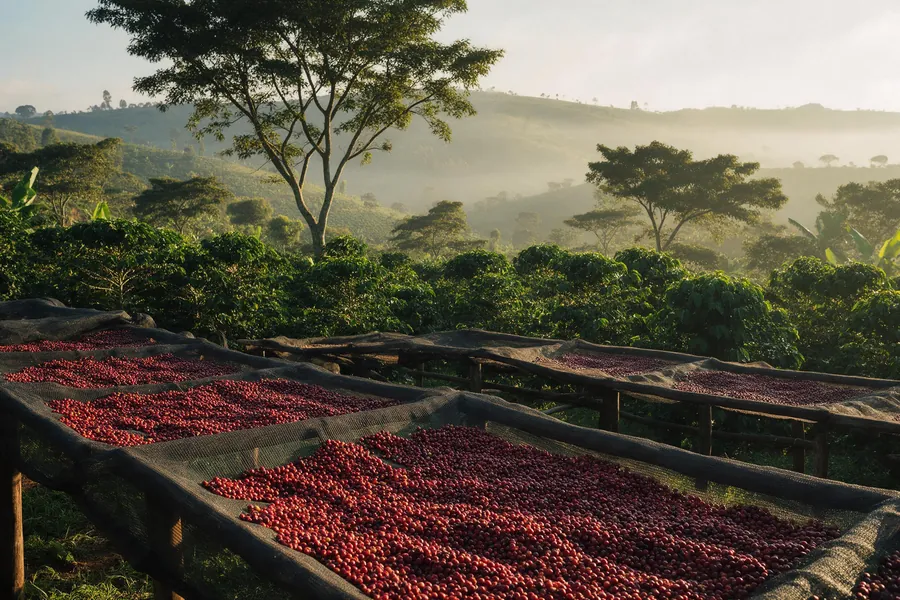
Washed coffees are depulped, fermented and dried on African raised beds. They are clean, citric, floral. Naturals dry inside the whole fruit for three to four weeks and take on berry aromas and a winey edge along the way. Both methods are found here in perfection, often from the same washing station.
Harvest and trade
The harvest runs from October to January. Smallholders, on average farming less than a hectare, deliver cherries to washing stations that collect and process the coffee. Trade ran through the central commodity exchange in Addis Ababa for a long time; since 2017 washing stations have been allowed to export directly again. For roasters that means you know which village the coffee comes from once more.
In the cup
Roasted light as a pour over, Ethiopian coffee is an experience for people who like tea: light, floral, with an acidity closer to citrus peel than to vinegar. As espresso it turns fruity and takes practice, because the dense bean gets sharp when the extraction is too short. Roasted dark, it loses what makes it special.
The coffee ceremony
Here coffee is everyday life, not export. In the ceremony green beans are roasted in a pan, pounded in a mortar and brewed three times in a clay jebena. The first brew is called abol, the second tona, the third baraka, the blessing. It takes an hour, and you do not leave before the end.
Common questions
What does coffee from Ethiopia taste like?
Floral, citric and tea like in washed coffees, berry and winey in naturals. Light body, lively acidity, plenty of sweetness.
What does heirloom mean in Ethiopian coffee?
A collective term for the many wild, unclassified arabica varieties that grow in the Ethiopian forests.
Share