Panama produces tiny volumes and the most expensive coffees in the world. Boquete and Volcán in portrait: the gesha variety, the cloud forest on the Barú volcano, the Best of Panama auction and a profile of jasmine, peach and bergamot.
Flavour profile
Typical notes
JasminePeachBergamotHoneyTropical fruit
Harvest
In 2004 a family farm in Boquete entered a competition with a coffee that tasted of jasmine and peach and of nothing the judges knew. The variety was called gesha, originally came from the Ethiopian forest and had been planted in Panama for decades as a windbreak. Since then Panama has been the country where coffee became a luxury good.
Gesha
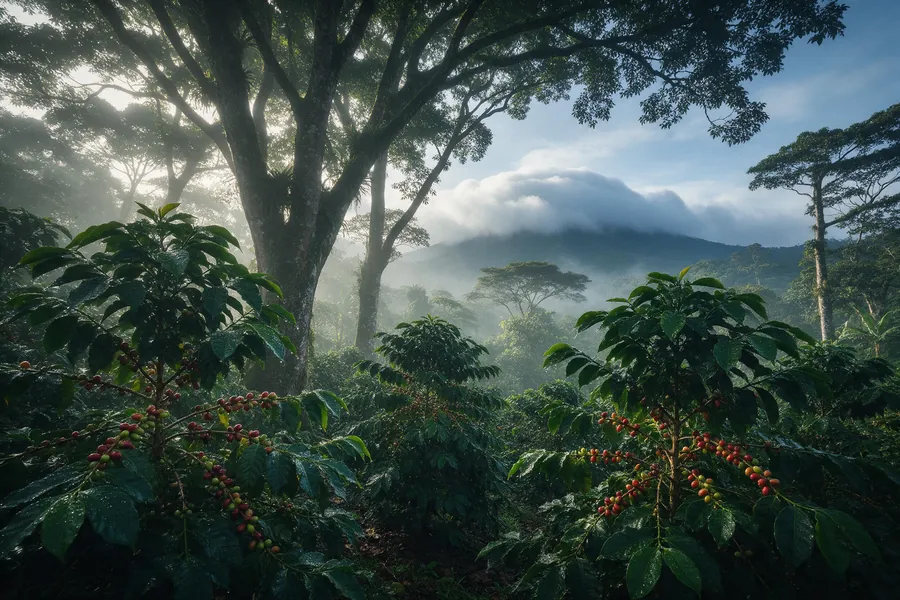
The plant grows tall, yields little and is delicate, its beans are elongated and its leaves bronze coloured. It needs altitude, shade and mist to develop its aroma: jasmine, bergamot, peach, a honey like sweetness and a clarity that recalls tea. At the annual Best of Panama auction the best lots reach prices a hundred times above the world market. A pound can cost more than a roasting machine.
The regions
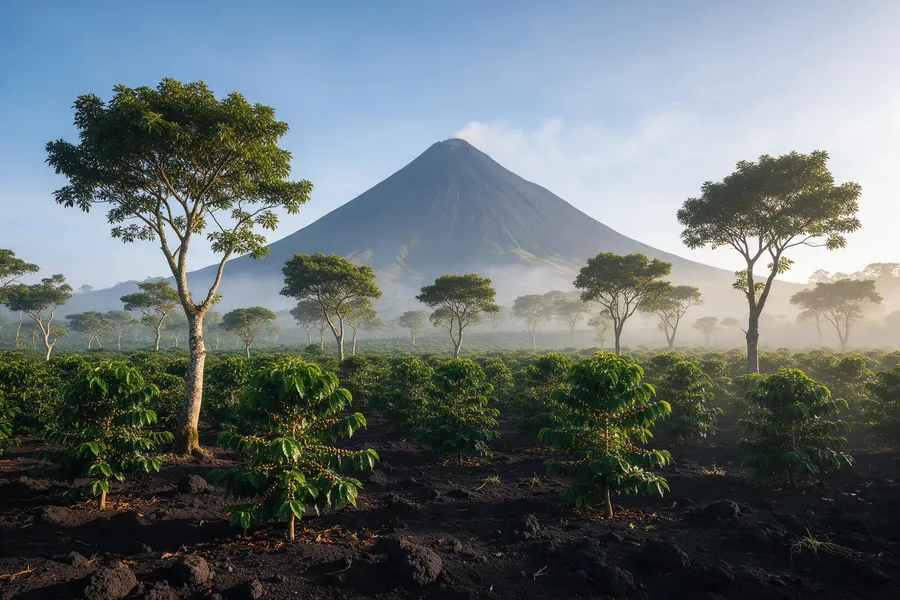
Boquete lies on the eastern flank of the Barú volcano in Chiriquí province, between 1,400 and 1,900 metres. The mist, called bajareque, keeps the air humid and the sun mild. Volcán on the western side is drier and higher, with a clean, fruity acidity. Both regions have farms that have been family owned for generations, many of them founded by immigrants from Europe.
Processing
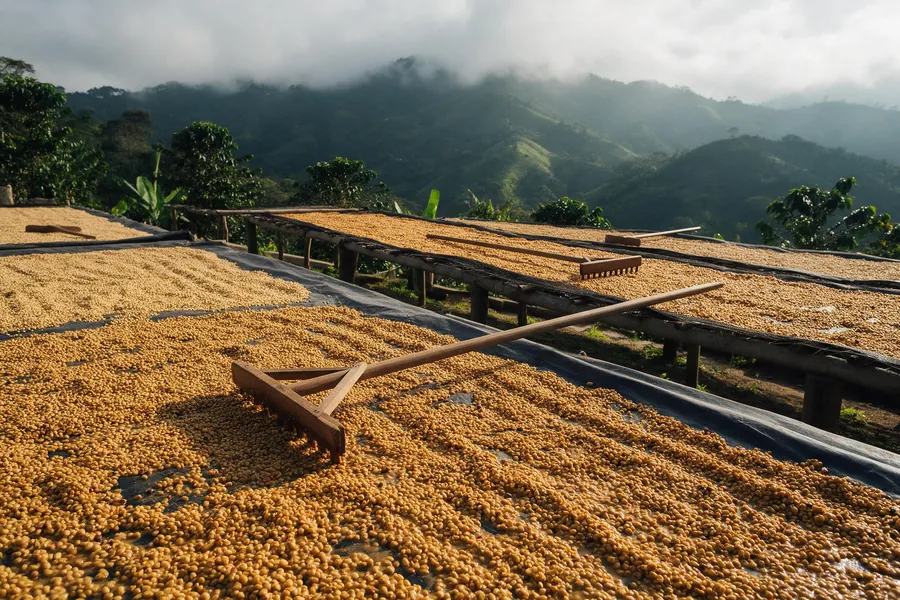
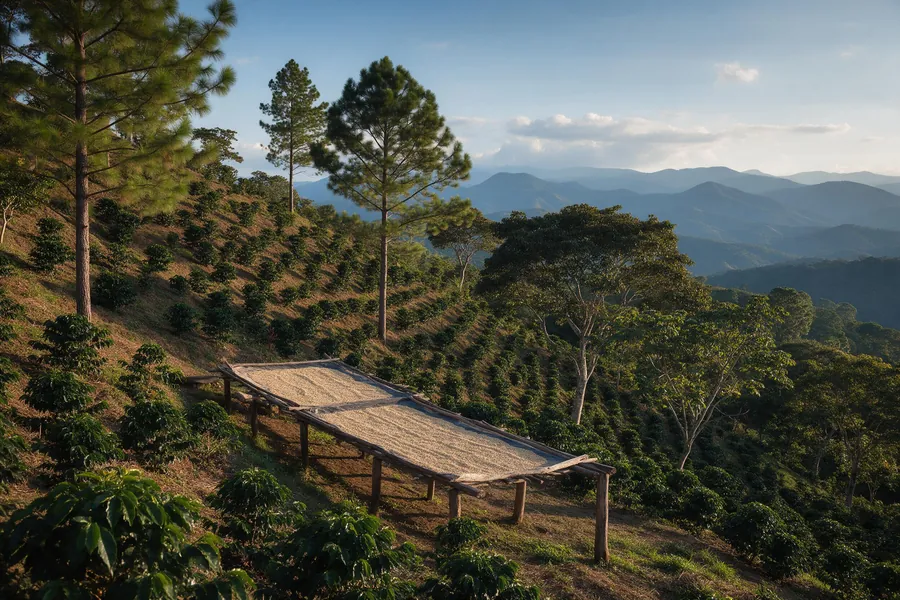
Washed geshas are the reference for clarity and florals. Naturals turn tropical and sweet, with mango and strawberry. For some years the farms have been experimenting with anaerobic fermentation and carbonic maceration, which push the coffee towards liqueur and spice. Everything dries slowly on raised beds or in greenhouses.
Beyond gesha
Panama also grows caturra, catuaí, typica and the large pacamara. These coffees are clean, sweet and balanced, with citrus and milk chocolate, and cost a fraction. Anyone who wants to get to know Panama starts here.
In the cup
A gesha belongs in a pour over, roasted light, with soft water and no milk. Anything else would be a waste. It is light, floral, sweet and long, more tea than coffee. As espresso it only works with plenty of experience and plenty of money.
Common questions
Why is gesha coffee so expensive?
The plant yields little, is delicate and grows as well as it does in Panama in only a few places. On top of that comes worldwide demand for an aroma no other coffee has.
Gesha or geisha?
Both spellings are in use. Gesha is the place in Ethiopia the variety comes from. In Panama the spelling geisha has taken hold.
Share