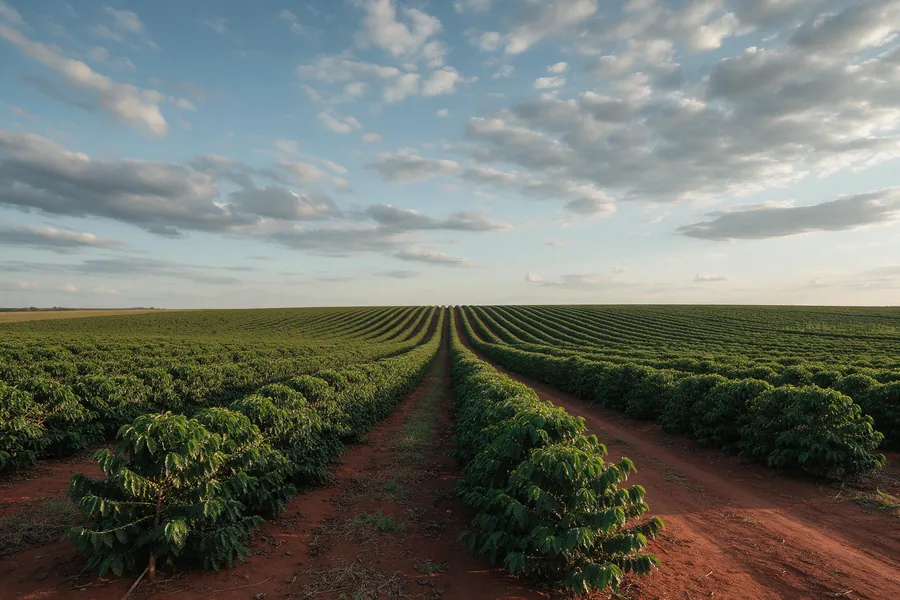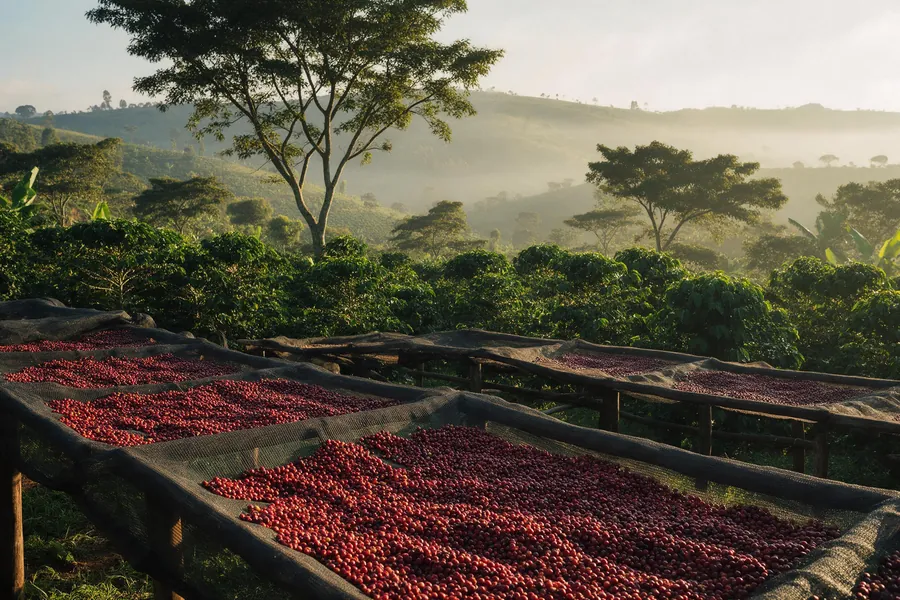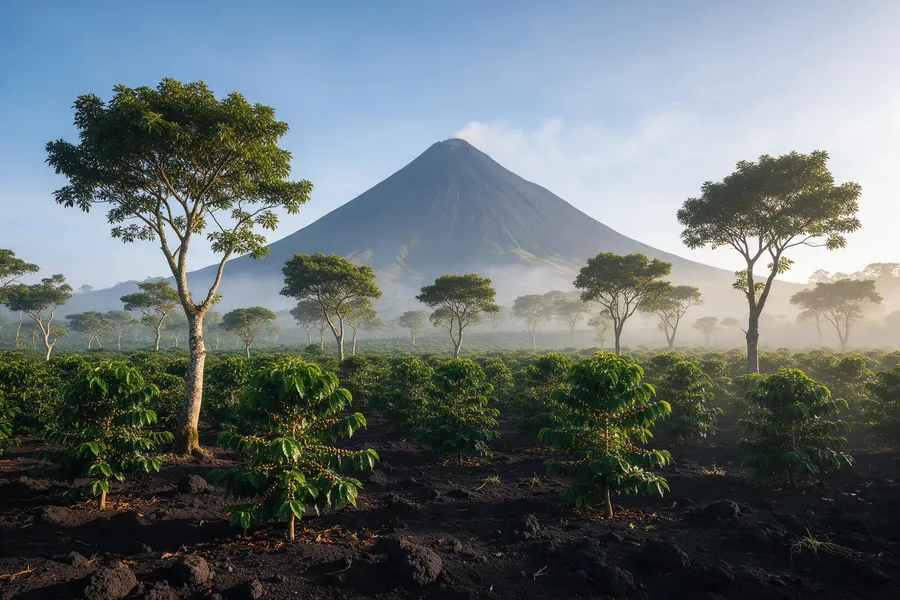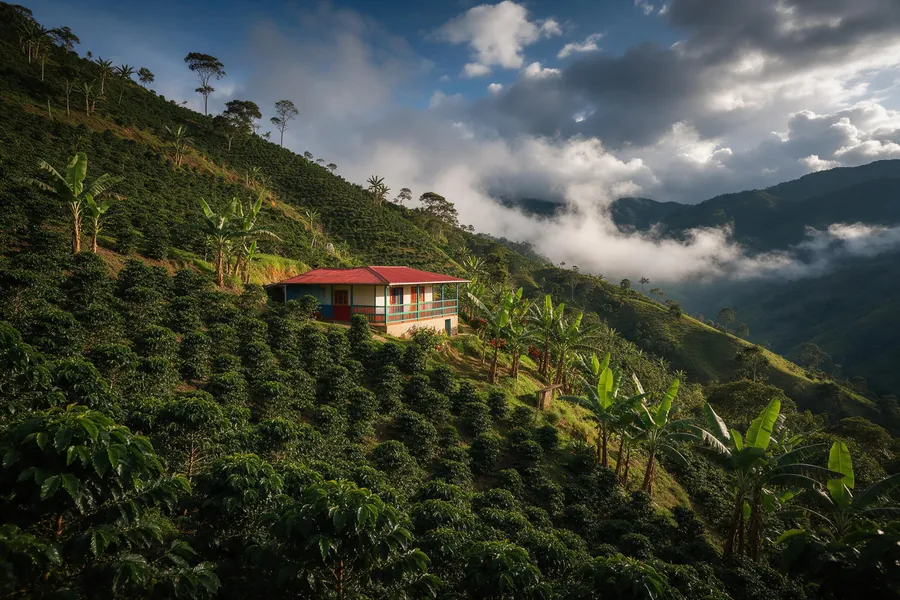
Colombia is the third largest coffee producer in the world and grows washed arabica only. Huila, Nariño and Antioquia in portrait: altitudes, two harvests a year, varieties such as castillo and caturra and the typical profile of caramel and red fruit.
Flavour profile
Typical notes
CaramelRed appleCherryMilk chocolatePanela
Harvest
Three Andean ranges, an equatorial climate and volcanic soils: Colombia has the best conditions for coffee on the continent, and it uses them with a discipline that is rare elsewhere. Arabica only, almost entirely washed, and a national federation that has counted every bean since 1927.
Two harvests
Because the rainy seasons arrive at different times depending on the region, Colombia harvests almost all year. The main harvest runs from October to December, the smaller mitaca harvest from April to June. For roasters that means fresh Colombian coffee is available at any time.
The regions
Huila in the south is the specialty coffee region today: plots up to 2,000 metres, red fruit, caramel and a juicy acidity. Nariño on the border with Ecuador sits even higher, up to 2,300 metres, and delivers dense, sweet coffees with citric clarity. Antioquia around Medellín is the classic coffee country with balanced, chocolatey cups. Then there are Tolima, Cauca and the coffee cultural landscape triangle of Caldas, Quindío and Risaralda, a World Heritage Site since 2011.
Castillo and caturra
Coffee leaf rust threatened much of the crop in the 2010s. The answer was castillo, a resistant hybrid that now stands on more than half of the land. Purists prefer caturra and typica for their sweetness, but good castillo coffees are hard to tell apart. Huila now also grows gesha and pink bourbon for the auction market.
Processing
The classic method is washed, usually on the farm itself in small beneficios. For some years Colombian farms have been experimenting with fermentation like almost no others: anaerobic, with yeasts, with carbonic maceration. The results run from strawberry to cinnamon and are not for everyone, but they have taken Colombia to the top of the auction prices.
In the cup
Colombia is the coffee for everyone who likes balance: medium acidity, medium body, plenty of sweetness. Light as a filter it shows red apple and caramel, roasted medium it becomes a chocolatey espresso with cherry. An ideal coffee to start with that does not bore professionals either.
Common questions
When is the harvest in Colombia?
The main harvest runs from October to December, and a second harvest, the mitaca, from April to June. The timing shifts by region.
Why is Colombian coffee so well known?
From 1959 the coffee federation FNC marketed the country worldwide with the figure of Juan Valdez, and the offer was always washed arabica of consistent quality.
Share