Kenya grows the most powerful washed coffees in the world. Nyeri, Kirinyaga and Murang’a in portrait: the SL28 and SL34 varieties, the double fermentation process, the auction in Nairobi and a profile of blackcurrant and tomato.
Flavour profile
Typical notes
BlackcurrantGrapefruitTomatoBlackberryBrown sugar
Harvest
Kenya borders Ethiopia, but its coffee could not be more different. Where Ethiopia is floral and light, Kenya is juicy, dense and loud. The acidity recalls blackcurrant, the body is syrupy, and the sweetness holds it all together. Anyone who has had a good Nyeri in a pour over does not forget it.
SL28 and SL34
In the 1930s the Scott Laboratories in Nairobi bred varieties for the high ground around Mount Kenya. SL28 and SL34 were selected for drought resistance and yield, and along the way they produced an aroma profile that remains unique today. Both are vulnerable to coffee leaf rust, which is why the resistant hybrids ruiru 11 and batian are now being planted. Purists keep buying by SL.
The processing
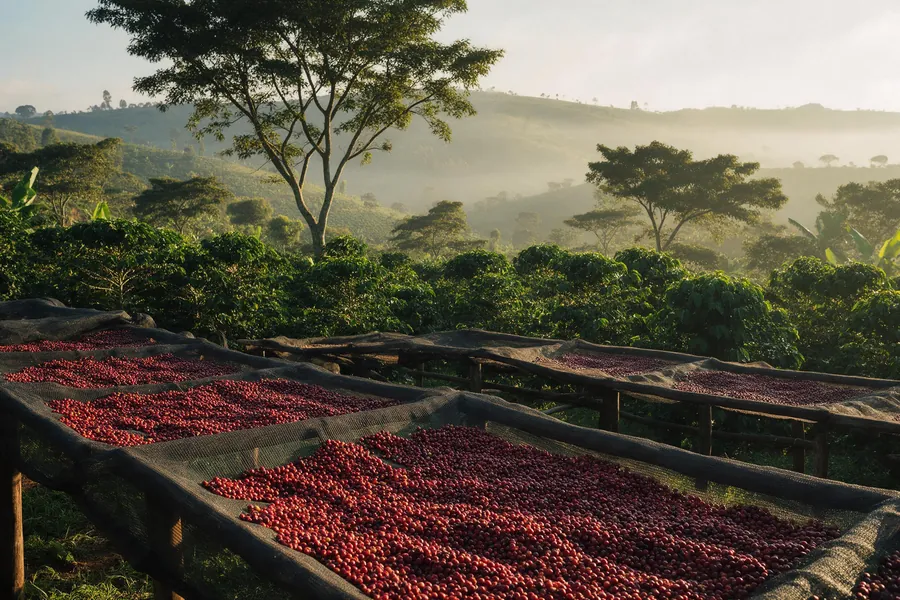
Kenyan washing stations, called factories here, work with double fermentation: after depulping, the coffee ferments dry for 12 to 24 hours, is washed, and then ferments again under water. A long soak in clean water and drying on raised beds follow. The process sorts out defects and reinforces the acidity and clarity.
The regions
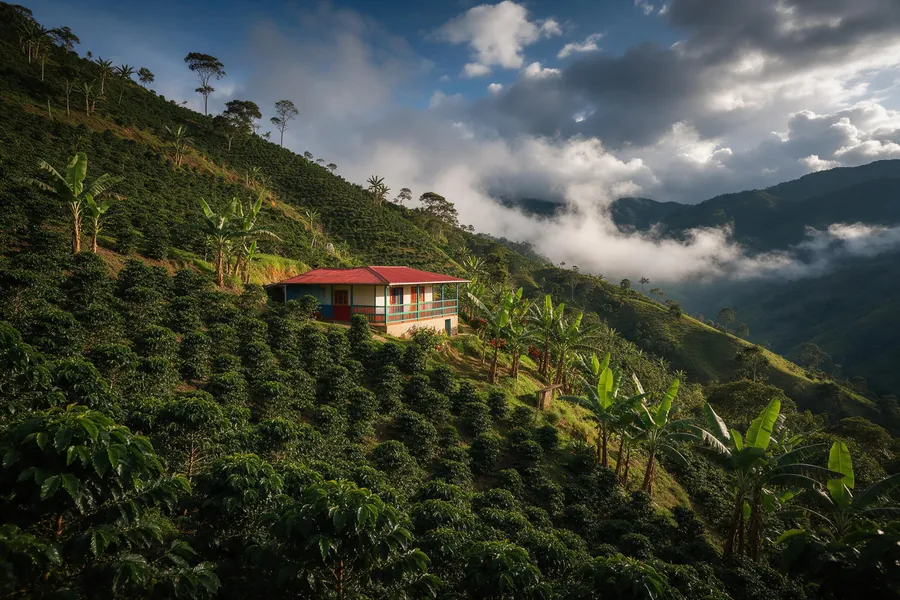
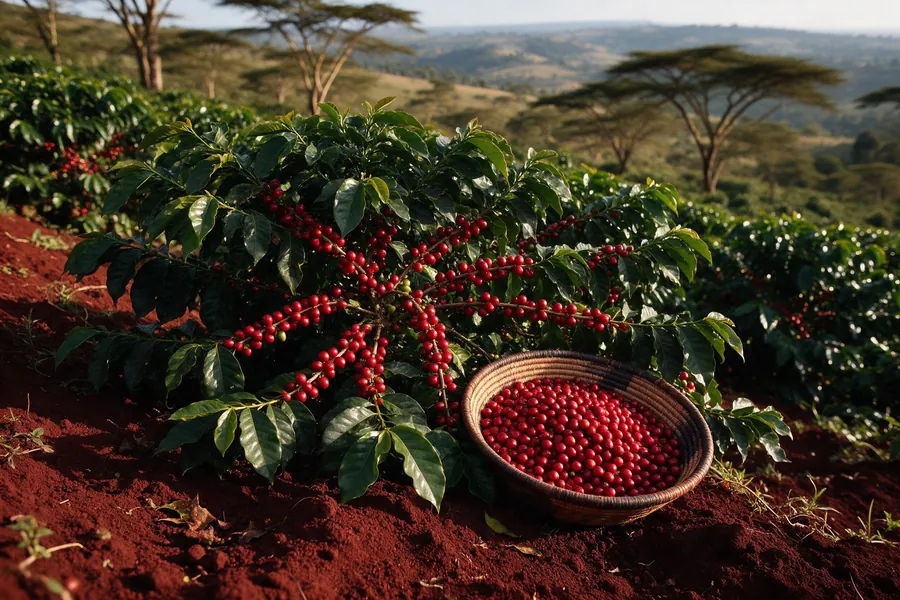
The centre lies on the slopes of Mount Kenya and the Aberdare range: Nyeri, Kirinyaga, Murang’a and Embu, all on red volcanic soil between 1,500 and 2,100 metres. Kisii and Bungoma lie in the west, Machakos further south. The farms are tiny, often under half a hectare, and deliver to cooperative factories with names like Gatomboya, Kiriaini or Tegu that mean something to enthusiasts.
AA, AB, PB
The letters on Kenyan coffees describe bean size, not quality: AA is the largest screen, AB the medium one, PB stands for peaberry, the single round bean. Large beans fetch higher prices at the weekly auction in Nairobi, but an AB can taste better than an AA.
In the cup
Roasted light to medium light, Kenya shows everything: currant, grapefruit, sometimes a note of tomato, plenty of sweetness and a syrupy body. Unbeatable as filter coffee, an adventure with acidity as espresso. Roasted dark it becomes interchangeable.
Common questions
What does Kenya AA mean?
A grading by bean size. AA are the largest beans, over 7.2 millimetres across, AB the next class down. It says little about taste.
Why does Kenyan coffee taste of blackcurrant?
The combination of the SL28 and SL34 varieties, volcanic soils, altitude and double fermentation gives a phosphoric, berry like acidity that occurs in this form only here.
Share